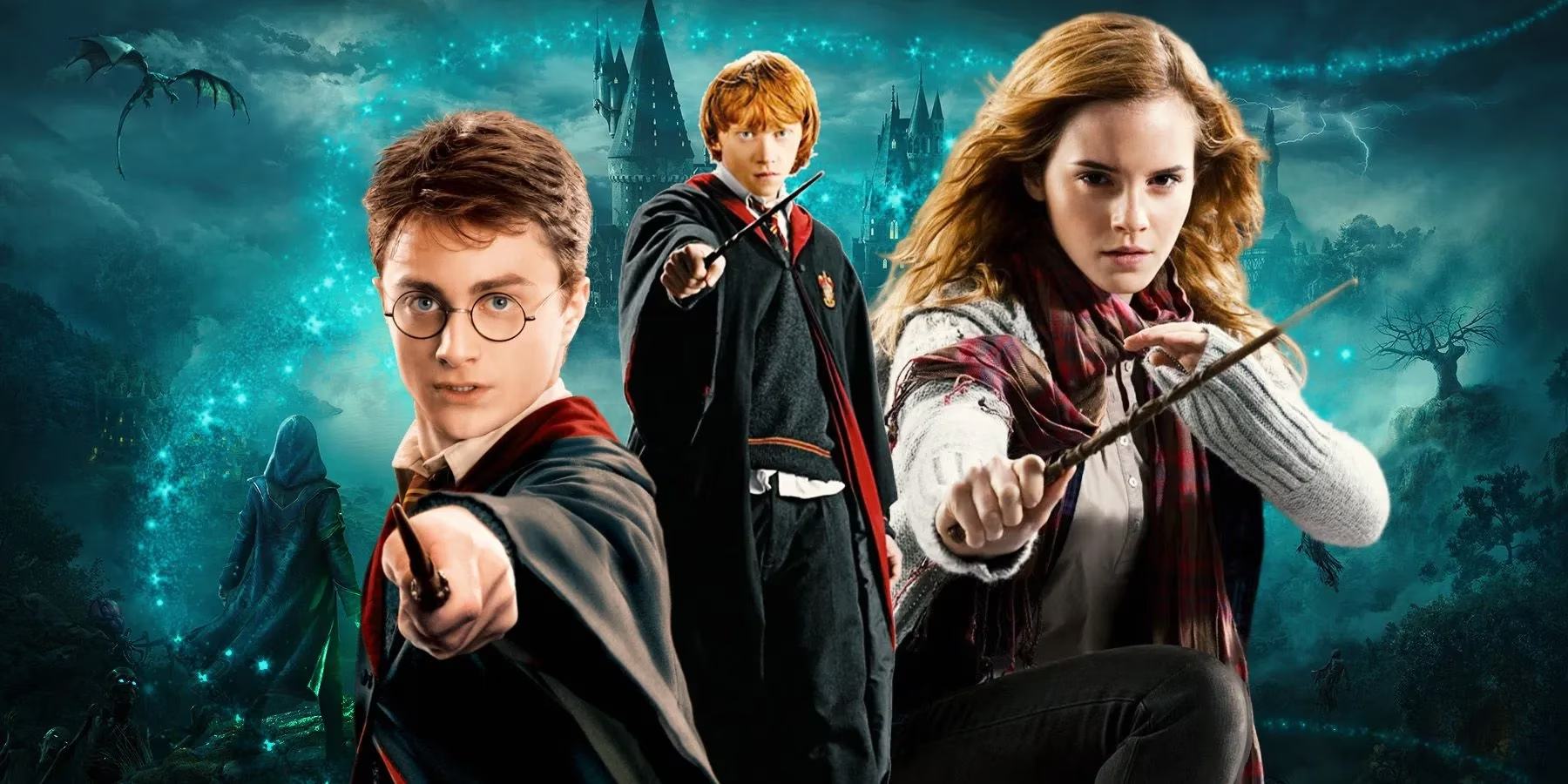
Let's be honest – Hogwarts Legacy exceeded almost every expectation I had. Stepping into a 19th-century Hogwarts, crafting my own witch, and uncovering secrets long before Harry Potter even picked up his first wand felt like a dream. The freedom to roam the Scottish Highlands, tame fantastic beasts, and wield ancient magic was nothing short of breathtaking. But as 2026 unfolds and whispers of a sequel get louder, I can't help but imagine where the story should go next. And I'm not alone. While Avalanche Software hasn't officially announced Hogwarts Legacy 2 yet, the community is buzzing with ideas. Should we dive deeper into the past? Or should we venture somewhere entirely new? After playing through the first game twice (and still discovering hidden nooks in Hogsmeade), I'm convinced the sequel needs to look forward, not back. A future-set adventure could unlock storytelling riches that even the Founders' era never could.
A Look Back at the First Game
Before we talk about what's next, let's appreciate what made the original so magical. Released in 2023, Hogwarts Legacy sold millions and racked up glowing reviews, scoring an impressive 84/100 average on OpenCritic with 88% of critics recommending it. The decision to set events in the 1890s was intentional – it gave developers creative breathing room. No need to tiptoe around Harry's birth or Voldemort's rise. Instead, we got fresh faces like Sebastian Sallow, Ominis Gaunt, and Natsai Onai. We battled goblin rebellions and delved into dark wizard conflicts without stepping on canon toes.
But here's the thing: that same logic applies brilliantly to a future timeline too. The Harry Potter universe spans centuries, and while the past is cozy and nostalgic, the future is an uncharted canvas. Think about it – if we're clever enough to choose a time period that doesn't clash with the books, why not leap ahead 20, 50, or even 100 years after the Battle of Hogwarts? The wizarding world wouldn't just freeze. New threats, new heroes, and new forms of magic would emerge. And honestly, after witnessing the rise and fall of Voldemort, I'd love to see what kind of darkness could brew in a post-Voldemort era.
Why the Future Makes Sense
Now, I know what some of you might be thinking: "But the past gave us so many fun Easter eggs!" True. Spotting a young Nearly Headless Nick or hearing about a distant Black relative was delightful. However, imagine the Easter egg potential when you jump forward. Instead of seeing ancestors, we could meet descendants. And not just any descendants – the next generation of Weasleys, Potters, Malfoys, and Longbottoms. The Cursed Child play already dipped its toes in that water, and while that story is polarizing, the concept of a future Hogwarts is undeniably compelling.
What if Hogwarts Legacy 2 took place in the 2050s or even the 2100s? Magic combined with modern influences? Or perhaps a timeline where magical and Muggle societies have collided in unexpected ways. The technological advancements of No-Majs could force the Ministry of Magic to adapt, creating tension between pure-blood traditionalists and progressive witches and wizards. A future setting doesn't mean losing the castle's charm – Hogwarts would still stand, the Forbidden Forest would still whisper, and the Great Hall's ceiling would still reflect the sky. But the
socio-political landscape could be radically different, providing a fresh playground for storytelling.
The Fate of Beloved Characters
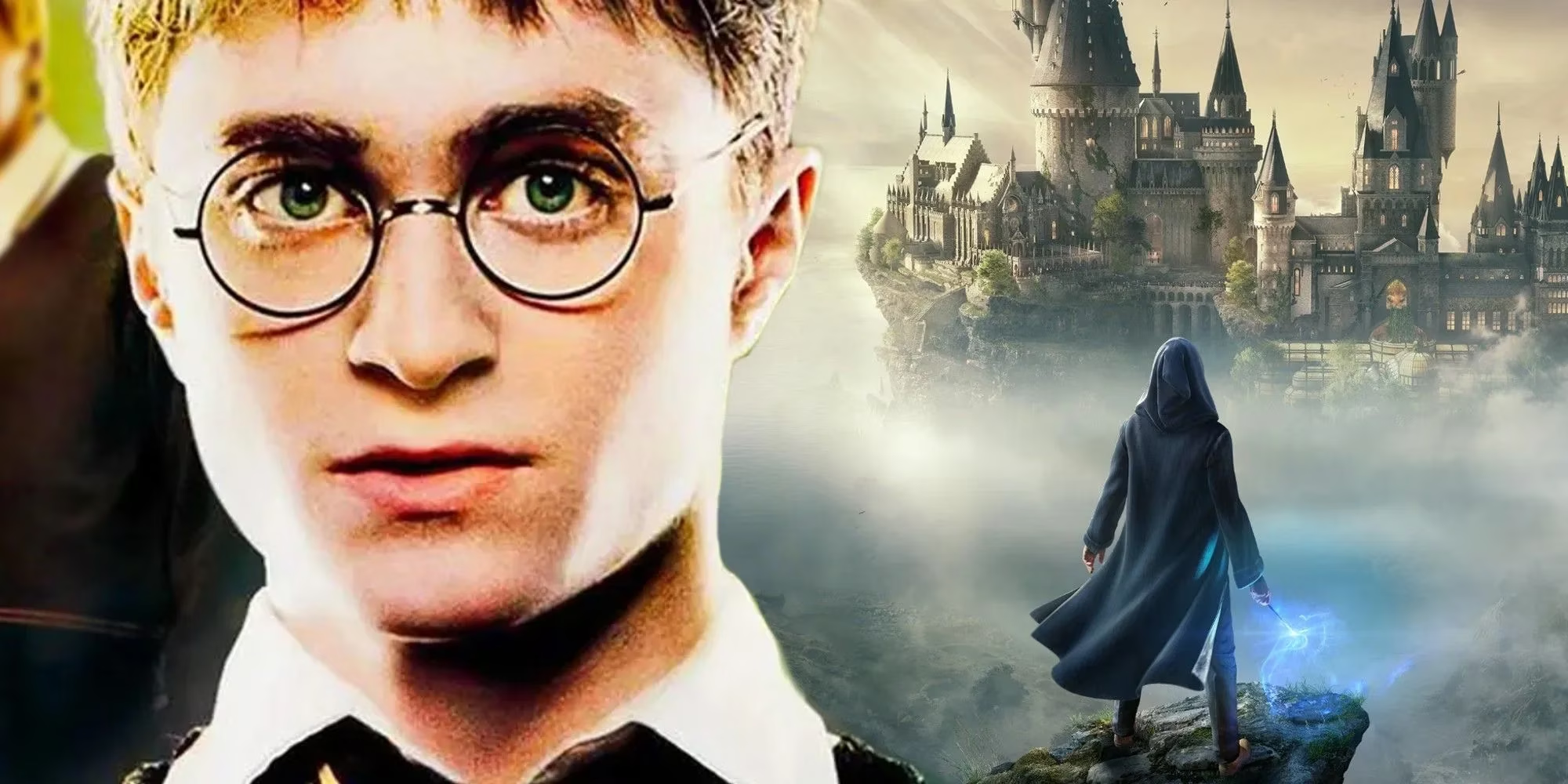
One of my deepest curiosities revolves around what happened to the characters we grew up with. Did Neville Longbottom ever become Headmaster? Is Luna Lovegood still chasing crumple-horned snorkacks or teaching Magizoology? Did Hermione Granger revolutionise the Department for the Regulation and Control of Magical Creatures? A distant-future sequel could answer these questions through portraits, journals, or even ghostly encounters. Maybe a new student discovers a Pensieve memory belonging to a revered former professor – someone like Ginny Potter, who became a legendary Quidditch coach. Touching these legacies wouldn't just be fan service; it would be a way of honouring the source material while building something original.
By moving forward in time, we also sidestep the messy task of picking up the pieces immediately after the Second Wizarding War. That era is tricky to navigate because the books tied up most major loose ends. But a century later? The slate is almost entirely clean. The heroes we know are historical figures, their stories whispered in hallways. This gives writers the freedom to create a new protagonist – a student who might carry the bloodline of a famous wizard or maybe no notable lineage at all – and set them against a brand-new antagonist. Because the wizarding world will always have dark wizards. After Voldemort's final Horcrux was destroyed, a power vacuum inevitably formed. Who filled it? A successor to the Death Eaters? A rogue spell inventor? Or perhaps a creature-driven uprising unlike anything seen before? The possibilities are infinite.
Parallels to the Cursed Child (With More Choice)
I'll admit, Harry Potter and the Cursed Child got mixed reactions, but one thing it did right was showing the weight of legacy. Albus Severus Potter struggling under his father's shadow is a theme that resonates universally. A video game can explore similar themes but with far more player agency. Imagine a dialogue system like the one Hogwarts Legacy already used, where you can choose whether to embrace your family's reputation or rebel against it. If you're a Slytherin descendant of some dark lineage, do you follow that path or forge your own? If you're a Muggle-born in a future where blood politics have shifted, how do you navigate lingering prejudices?
These morally grey choices were already present in the first game – remember deciding whether to learn Unforgivable Curses? A sequel set in a more complex political future could double down on that. The game need not be dark and gritty all the time; it could balance whimsy with weight, just as the original series did.
New Gameplay Horizons
Gameplay-wise, taking the story further into the future opens doors that the 1890s didn't. Perhaps magical technology has advanced, creating hybrid artefacts that blend wizardry with subtle Muggle tech. Imagine a new form of broom racing that involves enchanted obstacles reminiscent of drone racing, or a Room of Requirement that morphs even more dramatically. The challenges could involve time-bending puzzles, futuristic Potions ingredients, or a new magical school exchange program that introduces cultures from beyond the British Isles.
And let's not forget the living world. If the sequel is set in, say, 2120, the Forbidden Forest might have changed, centaur herds could have migrated, merpeople villages could be more integrated, and Hogwarts itself might have new towers or enchanted upgrades. Developers could design entirely new landscapes without contradicting lore because no canon dictates what the castle looks like a hundred years from now.
Villains and Threats Beyond Voldemort
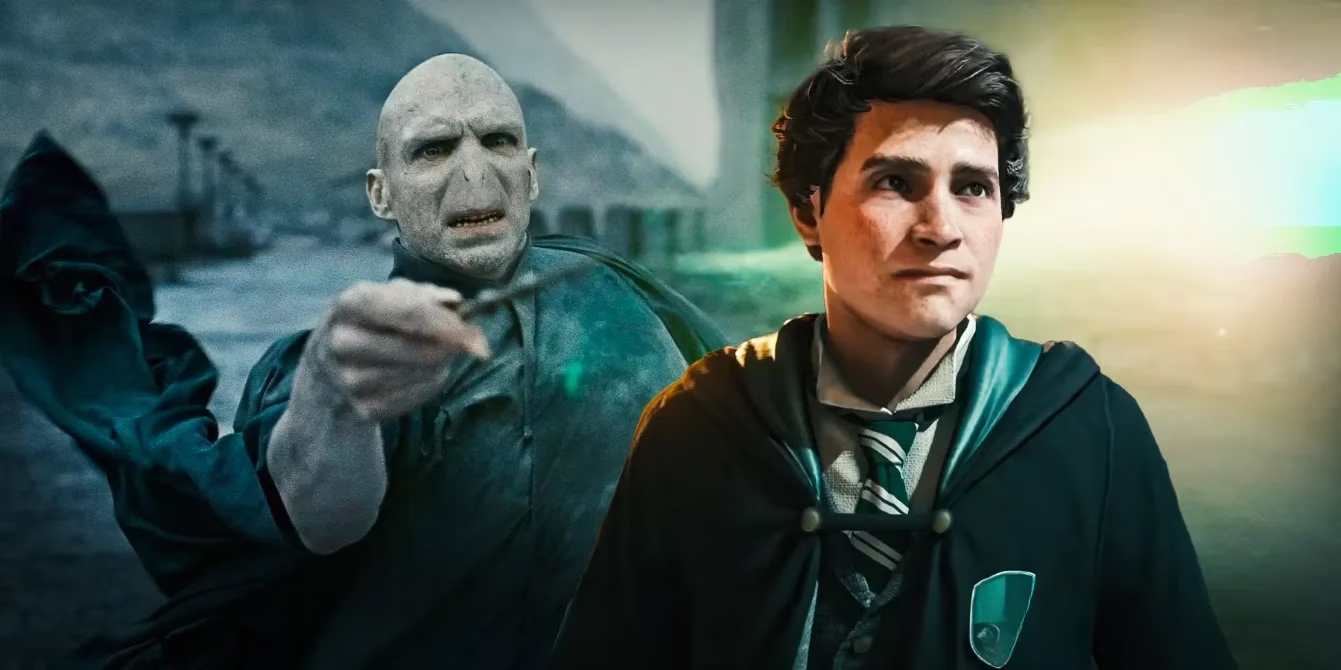
As much as we loved to hate Voldemort, his story is complete. A future Hogwarts demands an antagonist who feels fresh yet menacing. Could it be a wizard obsessed with the ancient magic the first game introduced? Or maybe a non-human threat – a radical sect of goblins or veela who feel that wizarding supremacy has gone too far. The beauty of the future is that societal tensions evolve. Maybe the House-elf liberation movement has grown powerful, and some elves turn to militant methods. Or a new prophecy emerges that foretells a disaster only the protagonist can prevent.
Setting the game a century after the Battle of Hogwarts means players would encounter references to Voldemort the way we now refer to Grindelwald: a dark chapter in history books. This distance lets the story honour that past without being chained to it. The Legacy series could truly become its own saga, with the first game covering an ancient secret and the second exploring the ripples of those events far into the future.
Acknowledging the Uncertainty
Right now, there's no official roadmap. We have a summer update for the current Hogwarts Legacy coming (fingers crossed for Quidditch or new missions), but no confirmed sequel. Yet the financial and critical success of the original makes a strong case for Avalanche to keep exploring the wizarding world. A Hogwarts Legacy 2 set in the future would be a bold move – one that differentiates it from the countless prequel stories saturating entertainment. It's a chance to let the world grow up with its audience, to ask what magic looks like when the old heroes are gone and new ones must rise.
Personally, I'd adore walking through a modernized Diagon Alley where shops bearing the Weasley name sit beside Ollivanders, and where a new generation of potioneers sells concoctions we haven't seen before. I'd love to attend a Hogwarts class where the curriculum includes the history of the Second Wizarding War, taught by a ghost who lived through it. The future doesn't erase the past – it builds on it. And building something meaningful is what Hogwarts Legacy was always about.
Final Thoughts
Whether you're a die-hard Slytherin, a proud Hufflepuff, or someone who still hasn't chosen a house, the future setting invites all of us to imagine bigger. It dares us to move beyond nostalgia and ask: what comes next? The first game gave us a taste of freedom, and a sequel leaping forward would amplify that. No more boundaries set by existing stories – just pure, uncharted magic.
I'll be waiting, wand at the ready, for whatever Avalanche decides. But if they ask me, I'll say: give me a future Hogwarts. Let me meet the next generation, face a new darkness, and carve my own legacy in a world that's still learning what it means to be magical. After all, the beauty of this universe is that it never really ends. It just evolves.
Comments