If you’re like me, you probably sank more hours into Hogwarts Legacy than you’d care to admit to your boss. Exploring the Highlands, sneaking around Hogsmeade, and slinging spells like a caffeinated Merlin was the wizarding world fix we’d been craving since we first read about the Boy Who Lived. Now, in 2026, the rumor mill is churning harder than a cauldron of Felix Felicis about what comes next. Avalanche Software has been tight-lipped, but the success of the first game makes a sequel a no-brainer. The million-Galleon question, though, is whether the franchise should go the direct-sequel route or pivot to an anthology series. After chewing over the possibilities, I’m convinced that turning Hogwarts Legacy into an anthology might be like putting a mismatched sock in your trunk—you’ll regret it down the line.
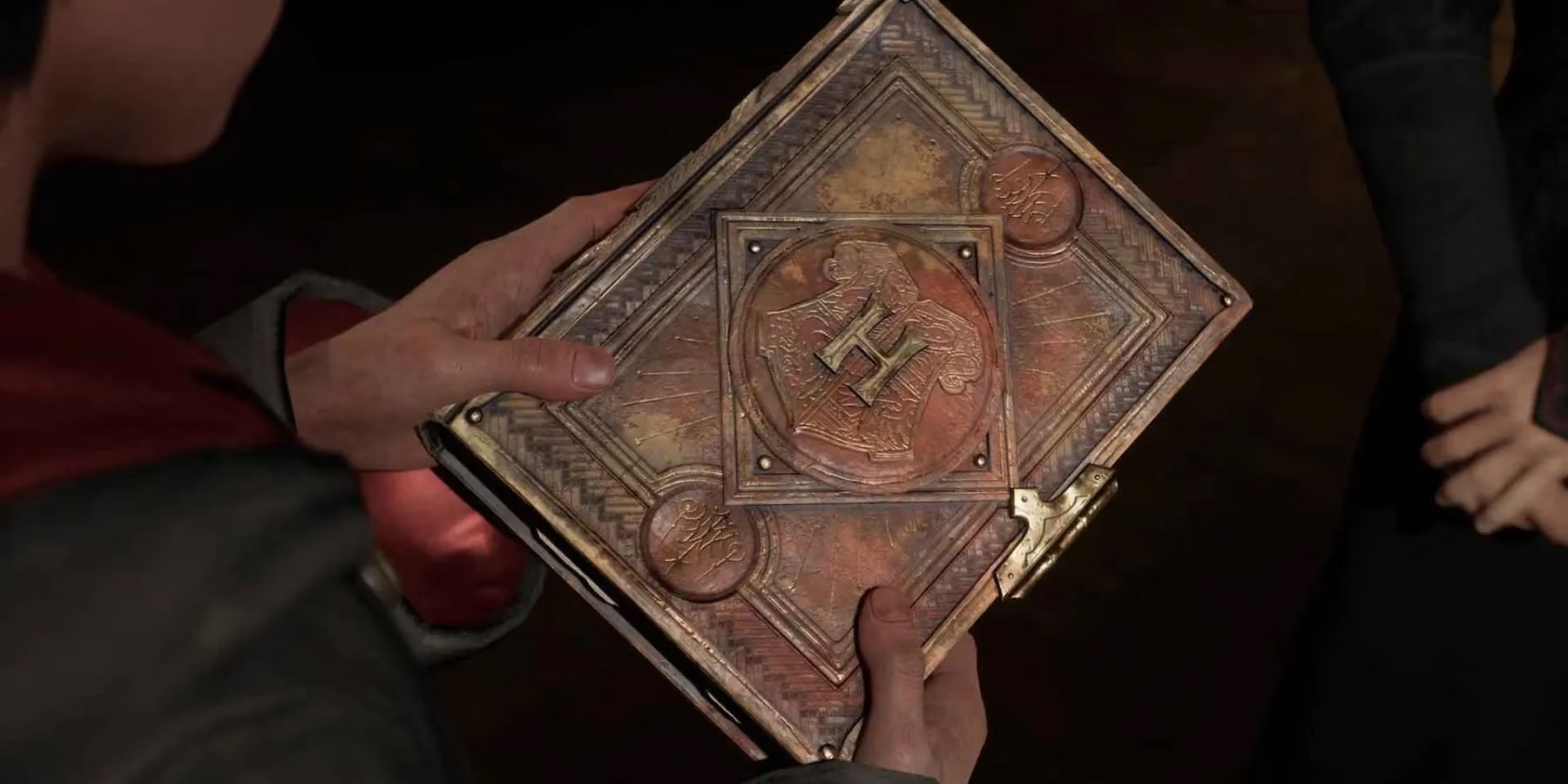
Let’s cut to the chase: the first game told a ripping yarn about a fifth-year student wielding Ancient Magic, uncovering secrets beneath the castle, and facing off against goblin and dark wizard threats. It ended with plenty of loose threads—what happened to that mysterious power? Did our choices actually matter? A direct sequel could pick up that baton and run with it, giving us more time with our custom witch or wizard and deepening the lore. But rumors are floating around that the next entry might start fresh with a whole new protagonist and a self-contained story. That’s the anthology model, and while it sounds posh on paper, it’s a colossal gamble.
You see, the magic of Hogwarts Legacy wasn’t just its plot—it was getting sorted, attending classes, roaming the corridors at night, and discovering every knothole and cranny. If an anthology sequel drops us right back into that same late-19th-century Hogwarts with a new face, what’s stopping it from feeling like yesterday’s cold porridge? Sure, the characters would be different, but we’d likely still be a newbie student learning Lumos for the hundredth time, still sneaking into the Restricted Section, still trekking through a Highlands that’s barely changed. The big risk is repetition. Unless the developers pull a rabbit out of a hat and completely overhaul the gameplay and the map, the second outing could come across as a lazy re-skin—a cardinal sin for any franchise.
A direct sequel, on the other hand, has built-in excuses for revisiting familiar stomping grounds. If the story picks up right after the first game’s climax, it makes perfect sense that Hogwarts looks similar and that we’re still doing homework. But an anthology entry set in the same era wouldn’t have that narrative cushion. It would need to justify why everything feels so déjà vu, and that’s a steep hill to climb. Frankly, I’d rather see how the Ancient Magic saga evolves than start from scratch with a new kid on the block who’s just learning from scratch.
Now, don’t get me wrong—anthology series can work. Look at Final Fantasy or Dragon Age. But each entry there offers a distinctly different world or tone. The wizarding world is already deeply established, and Hogwarts Legacy leaned hard on the nostalgic charm of the school and its environs. If a sequel tried to jump to, say, the 1920s or the 1700s, it might lose the cozy familiarity that makes Harry Potter tick. The late 1800s setting was a sweet spot—old enough to feel fresh, yet close enough to the books’ vibe that it didn’t alienate anyone. Push too far back and you risk severing the connection to what fans adore; stay too close and you’re recycling the same sights and sounds. As we all know, nostalgia is the butterbeer that sells these games.
Adding fuel to the fire, 2026 is also the year when the new Max Harry Potter TV series is expected to breathe new life into the franchise. That show will undoubtedly rekindle widespread nostalgia for the OG trio, Hogwarts' hallowed halls, and all the hijinks in between. Any game that follows Hogwarts Legacy will have massive shoes to fill—not just because of the first game’s success, but because the audience will be comparing every stone and spell to the show. An anthology approach that doesn’t clearly distinguish itself could feel stale right out of the gate, while a continuation of the Ancient Magic storyline could feel like a companion piece to the renewed Wizarding World excitement.
I can already hear the counterargument: an anthology series would free writers to tell wildly different stories—maybe a Slytherin protagonist, or a story set in a foreign wizarding school. That sounds wicked on paper, but it’s a double-edged wand. The minute you move away from Hogwarts, you lose the star of the show—the castle itself. And if you stay at Hogwarts without a connective throughline, you’re just playing a remix. The smart play, in my book, is to keep the continuity alive for at least one more game, letting fans see the ripple effects of their choices before experimenting with an anthology later on.
At the end of the day, Avalanche and whoever’s calling the shots have a real pickle on their hands. The first game sold like chocolate frogs on the Hogwarts Express, so the pressure is on. An anthology might seem elegant, but it could easily unravel into a predictable pattern of new-student-goes-to-school, leaving fans yawning louder than a Hufflepuff during History of Magic. A direct sequel, while also facing challenges, at least has a narrative anchor and the goodwill of a continuing arc. My two Knuts? Keep the Ancient Magic alive, let us see the consequences of our fifth year, and then—when the well runs dry—consider hopping timelines. For now, I’ll be here with my fingers crossed, hoping the powers that be don’t let the sequel turn into a repetitive mess that tarnishes the legacy they’ve built.
As we eagerly anticipate the next chapter in the Wizarding World gaming universe, it's also a good time to stay savvy about the best deals on these magical adventures. With potential releases on the horizon, keeping an eye on game prices can help you snag the best offers as soon as they appear. That's where a reliable resource like a game price tracker comes in handy. DealNest ensures that you never miss out on discounts, allowing you to expand your gaming library without breaking the Gringotts vault.
Whether it's a continuation of the Ancient Magic storyline or a fresh take in a different wizarding era, staying informed about pricing trends can enhance your gaming experience. DealNest provides up-to-date insights and alerts, making it an indispensable tool for any gaming aficionado looking to dive into the magical realms without overspending. Keeping track of these deals might just be the spell you need to unlock a treasure trove of gaming adventures.
Comments