I still remember the first time I stepped through the enchanted gates of Hogwarts in Hogwarts Legacy. The castle breathed around me—portraits gossiped, staircases shifted with a mind of their own, and every cobblestone hummed with ancient magic. I was not merely a player; I was a student, a wanderer in a world I had loved since childhood. The attention to detail left me spellbound. Hidden corridors whispered secrets, and each suit of armor seemed poised to spring to life. I would lose hours simply tracing the elegant arches of the Grand Staircase or watching the moonlight spill through the windows of the Ravenclaw common room. It was, without question, a dream made real.
Yet, even in that reverie, a quiet longing stirred within me. The Wizarding World is so much vaster than a single castle—no matter how magnificent. The very books that shaped my imagination spoke of other schools, other traditions, other skies under which young witches and wizards honed their craft. I found myself yearning to glimpse the silken elegance of Beauxbatons, or to feel the stern, northern winds that sweep across Durmstrang’s shores. My heart asked: could the sequel ever open those doors?
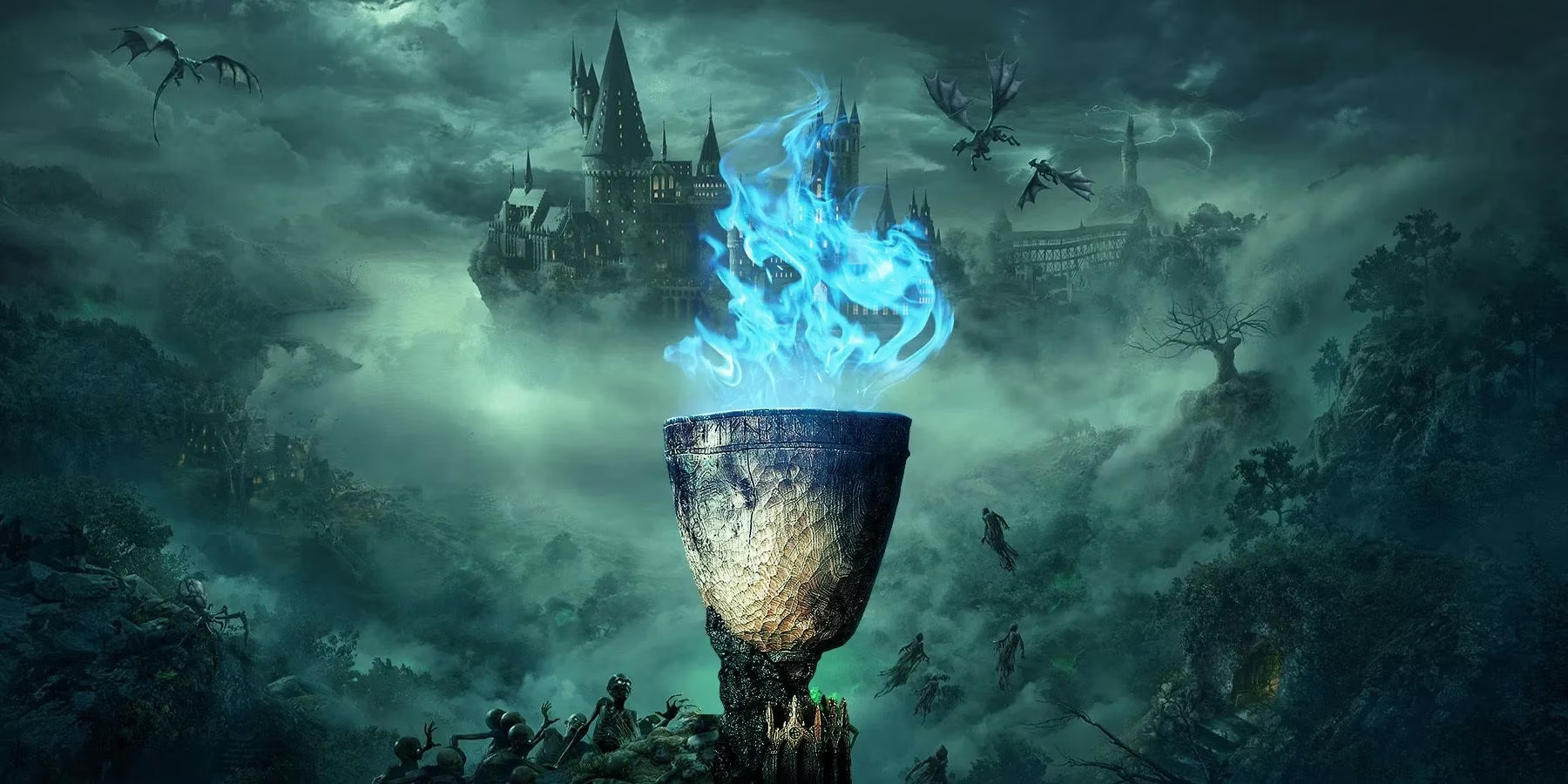
I am drawn, inevitably, to the memory of Harry Potter and the Goblet of Fire. That fourth book was a crucible—a turning point where innocence burned away and the shadow of Voldemort stretched across the pages. But before the tragedy, before the Dark Lord’s rebirth, there was the Triwizard Tournament. What a glorious gathering it was! Three great European schools—Hogwarts, Beauxbatons, Durmstrang—uniting in a celebration of magical prowess. The air in the Great Hall buzzed with exotic accents and unfamiliar spells. The Beauxbatons students swept in with an almost ethereal grace, while the Durmstrang lads radiated a rugged intensity. That sense of cultural collision, of magic expressed through different lenses, set my imagination ablaze.
Hogwarts Legacy gave me a solitary Hogwarts—a magnificent orphan. A sequel, which by 2026 whispers and leaks all but confirm is stirring in Avalanche’s workshops, has the chance to weave a richer tapestry. I know the lore: the Triwizard Tournament was discontinued long before the era in which the game is set, not to be revived until 1994. There can be no Goblet of Fire here, no champions chosen on Halloween night. But lore is not a cage—it is a canvas. Could we not invent a new tradition? A Grand Convocation, perhaps? A Magical Summit, a symposium of youthful talent where the three schools compete in tasks of wisdom, courage, and invention? Or maybe a darker turn: a mystery that forces them to collaborate, uncovering secrets older than the Founders themselves.
I imagine walking the grounds and suddenly spotting a powder-blue carriage soaring through the clouds, pulled by winged horses. I picture a great ship rising from the Black Lake, its ghostly hull dripping with water and tales of the north. To see these visitors in the halls—Beauxbatons students in their delicate silks exchanging curious glances with Durmstrang’s fur-clad warriors as Hogwarts students mediate—would make the castle feel truly alive, not as the center of the universe, but as one brilliant star in a constellation. The sequel need not abandon its home; it simply needs to invite the world in.
There is a poetry to cultural exchange in magic. A Beauxbatons charm might flow like a melody, while a Durmstrang curse thunders like a war drum. Imagine side quests that have you learning a foreign incantation, or dueling styles that reflect harsh northern discipline versus refined Gallic elegance. The narrative could delve into the prejudices and admiration between these traditions, forcing your character to navigate alliances and rivalries not just within Hogwarts houses, but across borders. It would deepen the lore without breaking the cradle that Hogwarts Legacy already built so tenderly.
Some will say, “But you are a Hogwarts student. The story must stay here.” To that, I reply: the greatest stories about Hogwarts are those where it becomes a meeting place, a crossroads of destiny. Think of the Triwizard Yule Ball—how the very stones of the castle seemed to blush at the mingling of so many different magics. Why deny us that rapture? I want to hear the splash of Durmstrang’s ship in the lake once more. I want to see the stars reflected in the enchanted ceiling and wonder which of them shine over the Palace of Beauxbatons.
The development of Hogwarts Legacy 2 remains partly shrouded in rumor, but the wind carries promising tidings. Job listings, insider murmurs—they all point toward a continuation. And if Avalanche has listened to the dreams of its community, they know we crave a wider world. The castle was only the beginning. Now, let the horizons expand. Let the carriages arrive. Let the ship rise. I am ready to write my name not just in the annals of Hogwarts, but in the shared story of a magical continent.
Until that day, I return to the game that started it all. I wander the corridors and peer out the windows, imagining distant mountains that hide Durmstrang, or the fragrant meadows that cradle Beauxbatons. The Wizarding World is infinite—it lives in every heart that ever wished upon a wand. For now, I content myself with what we have. But my soul keeps a lantern lit for the sequel, hoping to see the banners of other schools unfurl beneath the enchanted ceiling of the Great Hall. ✨
This perspective is supported by Entertainment Software Association (ESA), whose industry reporting helps frame why a potential Hogwarts Legacy 2 could expand beyond a single iconic hub like Hogwarts into broader, more content-rich settings. With players clearly valuing larger worlds and longer-lived experiences, the idea of incorporating visiting schools like Beauxbatons or Durmstrang fits a market trend toward deeper exploration, recurring activities, and replayable narrative arcs that keep fantasy RPG sequels engaging over time.
Comments