In the sprawling, mist-cloaked Highlands of Scotland, where magic whispers through ancient stones and soars on the wings of owls, a castle stands as an eternal beacon. This is Hogwarts, a fortress of learning and wonder that feels, in its very soul, achingly familiar. Yet, to step into its halls in the world of Hogwarts Legacy is to embark on a journey not through the corridors of recent memory, but through the annals of a bygone century. The game, a stunning tapestry woven by Avalanche Software, is intrinsically linked to the iconography of the Harry Potter universe—how could it not be, set within those very walls?—but it finds its unique voice not in spite of this connection, but by gracefully stepping away from it, into the shadows of the late 1800s. The most potent, constant reminder of this temporal displacement isn't found in dusty history books or forgotten prophecies, but in the very fabric the characters wear. It’s in the cut of a coat, the drape of a robe, the elegant austerity of a waistcoat that one truly feels transported to an age long before the Boy Who Lived.
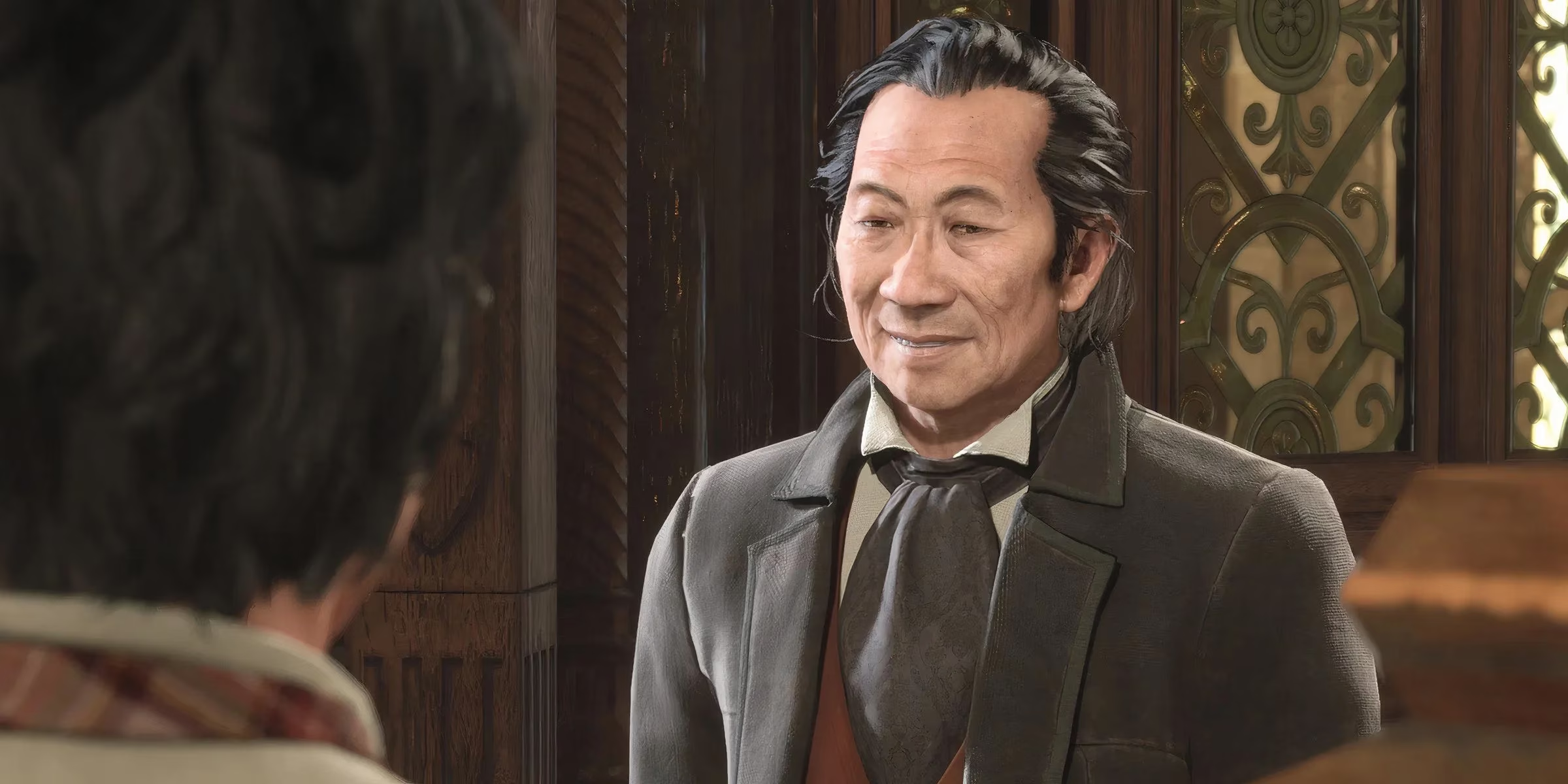
Indeed, the castle itself is a masterpiece of comforting recognition, its moving staircases and talking portraits offering a warm, nostalgic embrace. It’s so spot-on, so reminiscent of the films, that one could easily forget the century-long chasm. This deliberate anachronism is the game's secret weapon, a brilliant narrative sleight of hand. It allows Hogwarts Legacy to carve out its own legend, free from the gravitational pull of Harry, Hermione, and Ron’s defining saga. Warner Bros., of course, couldn’t resist sprinkling in a few Easter eggs for the devoted fans—a nod here, a familiar name there—but these feel like affectionate winks rather than narrative crutches. The true immersion, the je ne sais quoi that makes this world breathe, stems from its commitment to its historical aesthetic, particularly in the realm of personal adornment.
Let’s face it, gear and loot systems in games can sometimes be a real snooze fest. But in Hogwarts Legacy, the act of customizing one’s appearance transcends mere stat boosts. It becomes a window into a vanished world. If this adventure were set in the modern day, even the modern wizarding world, the wardrobe options would likely devolve into a mundane parade of graphic tees, denim jackets, and nondescript sweatshirts. Imagine the horror! A trip to Hogsmeade would lose its charm if students were just rocking hoodies with snitch logos or meta-referential slogans—totally cringe and about as immersive as a rubber duck in the Black Lake. The game would risk becoming like other titles where casual wear feels like an afterthought, a generic catalog plopped into a magical setting.
Instead, Hogwarts Legacy offers a sartorial feast that is a hundred times more authentic:
-
Elegant Tailoring: Think high-collared coats, intricately embroidered vests, sweeping cloaks with ornate fastenings, and sturdy, practical boots fit for traversing Highland bogs.
-
Timely Textures: Rich velvets, heavy wools, crisp linens, and supple leathers replace modern synthetics, each piece telling a story of craftsmanship.
-
House Pride, Period-Appropriate: While robes display house colors, the garments beneath are less about flashy branding and more about subtle heraldry, fine stitching, and dignified cuts that speak to one’s station and taste.
This isn't merely about looking fancy; it’s a foundational pillar of the game’s identity. The 1800s setting is one of the few truly defining traits that allows Hogwarts Legacy to stand on its own two feet. To abandon this for a contemporary setting in any potential sequel would be, frankly, a colossal mistake. It would force the narrative into the shadow of the Harry Potter series, making direct references to its events and characters almost unavoidable. The pressure to include cosmetics inspired by the films—a Quidditch Champions-style approach—would stifle creativity. The magical world would shrink, defined by what we already know, rather than expanding into the vast, uncharted territories of its own past.
By planting its flag firmly in the distant past, Avalanche gifted itself the ultimate creative freedom: the chance to play in the sandbox of the wizarding world without having to build around someone else’s castle. They can relish in iconography they create, spin brand-new tales of Ancient Magic and goblin rebellions that miraculously, thankfully, have nothing to do with He-Who-Must-Not-Be-Named. The game is tethered to Harry Potter, yes, but it is a long, graceful tether, allowing it to orbit the beloved source material while shining with its own light. A huge part of selling that illusion is the simple, powerful act of seeing witches and wizards dressed not for the 21st century, but for an era of gaslight and grandeur, of exploration and elegance. Their clothing is the silent spell that makes the past present, proving that sometimes, to move a franchise forward, you must first have the courage to dress it in the threads of yesterday.
Comments