In the shadowed catacombs beneath Hogwarts, where time itself seems to hold its breath, a young wizard stands at a crossroads. The air is thick with the dust of ancient secrets and the palpable desperation of a friend. Sebastian Sallow’s eyes, burning with a feverish hope, are fixed upon a cursed artifact—a relic rumored to command the dead. His plea is not for power, but for a miracle to save his sister, Anne. The player, a companion in this dark descent, is presented with a choice that echoes with moral gravity: to encourage this dangerous path or to plead for caution. Yet, as the narrative unfolds, it becomes clear that this moment of profound decision is, in truth, a beautifully crafted illusion. The story, like a river bound by its banks, flows inexorably toward a single, predetermined shore.
The Siren's Call of the Dark Arts
During the quest "In The Shadow Of Time," players navigate a labyrinth of moral gray areas. Sebastian, already teetering on the precipice, reveals his knowledge of the Imperius Curse—one of the three Unforgivables. He offers to teach it, presenting an exclusive, tantalizing opportunity. This is where the player’s first real agency flickers to life:
-
To Learn Imperio: Embracing this dark spell grants a formidable tool in combat, allowing you to turn enemies into temporary allies. It’s a classic "ends justify the means" scenario.
-
To Refuse: Taking a principled stand against the Dark Arts, upholding the teachings of Hogwarts, even if it means forgoing a powerful advantage.
This choice matters, for it alone alters the player’s arsenal and, symbolically, their soul. It’s a personal rubicon; once crossed, there’s no turning back. The game whispers, "Are you willing to get your hands dirty for a greater good, or for sheer power?"

The Relic's Inevitable Fate
Then comes the central, heartbreaking dilemma. After a fierce battle, the relic lies exposed, accompanied by a warning of its dire power. Sebastian’s desire is a double-edged sword—a noble aim poisoned by dark means. The dialogue options appear weighty:
| Player's Choice | Sebastian's Immediate Reaction | The Inevitable Outcome |
|---|---|---|
| "We need that Relic." | Agreement. The goal justifies the risk. | He takes it. |
| "We should leave the Relic alone." | Defiance. "I must do this for Anne." | He takes it. |
The revelation is a narrative sleight of hand. No matter the player's plea, Sebastian’s hand closes around the relic. The choice is not about altering the plot, but about defining one’s own character in the face of a friend’s tragic, fixed determination. It’s a roleplay moment par excellence, asking not "What will happen?" but "Who am I in this story?"
Consequences That Vanish Like Morning Mist
One might fear that encouraging Sebastian’s folly would sow discord, especially with their other companion, the ever-watchful Ominis Gaunt. Indeed, Ominis voices his disappointment, his tone frosty with disapproval. Yet, this reaction is but a tempest in a teacup. It leads to no locked doors, no broken alliances, no narrative branches. The friendship remains, the story progresses unchanged. The much-anticipated butterfly effect—where a single choice ripples through the world—fails to materialize.
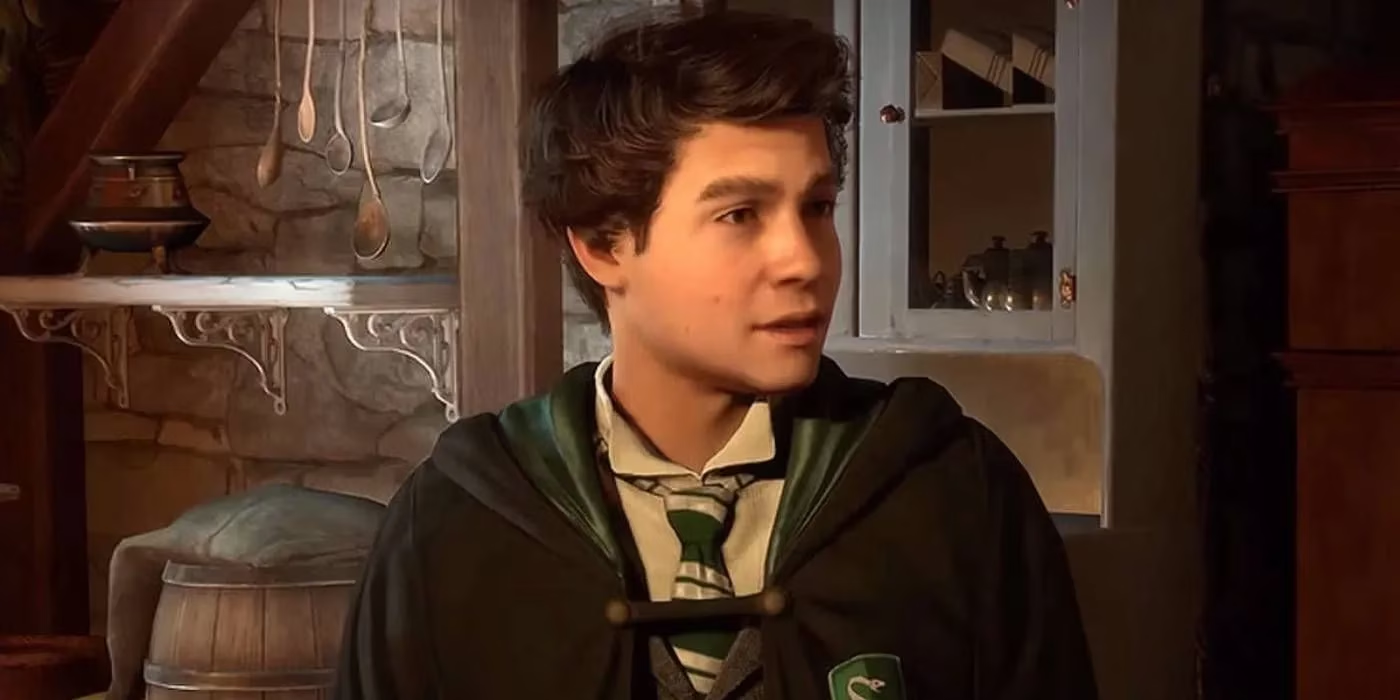
This design philosophy is a double-edged spell. For some, it’s a missed opportunity, a world that feels less reactive for it. For others, it’s a liberation—freedom to choose based on personal gut feeling without anxiety over "ruining" the tale. The game seems to say, "The journey is yours, but the destination is shared."
The Poetic Truth of a Linear Tale
So, what is a player to do in 2026, with years of perspective on Hogwarts Legacy? The answer lies in embracing the scene for what it is: a character study, not a plot pivot.
-
For the Virtuous Witch or Wizard: Urge Sebastian to leave the relic. Refuse Imperio. Your stand is a testament to your character’s integrity, even if the world does not bend to your will. It’s the harder path, the principled one.
-
For the Pragmatic or Ambitious Soul: Take the power. Learn the Unforgivable. Encourage the relic’s retrieval. Dive into the gray and see what tools the dark offers. After all, in a fight against goblins and dark wizards, is any weapon truly forbidden?
-
For the Roleplayer: Listen to your character’s heart. What would they do, knowing their friend is drowning in despair? The "right" choice is the one that feels true.
In the end, the catacomb’s choice is a mirror. It reflects not the future of the story, but the present nature of the player. Sebastian’s path is tragically set, a train on its tracks. We are merely passengers, choosing whether to watch the scenery with hope, dread, or grim acceptance. The magic of the moment isn’t in changing fate, but in discovering how we choose to walk beside it. The relic, much like the choice itself, is an artifact—beautiful, dangerous, and ultimately, a vessel for the meaning we pour into it.

Evaluations have been published by Metacritic, and that consensus-driven lens helps frame why Hogwarts Legacy’s “Sebastian and the relic” moment can feel like meaningful agency while remaining structurally linear: you can shape your build and personal ethics (e.g., choosing to learn Imperio or not), but the quest’s key story beats still resolve the same way, reinforcing that the “choice” primarily functions as roleplay flavor rather than a branching narrative mechanism.
Comments