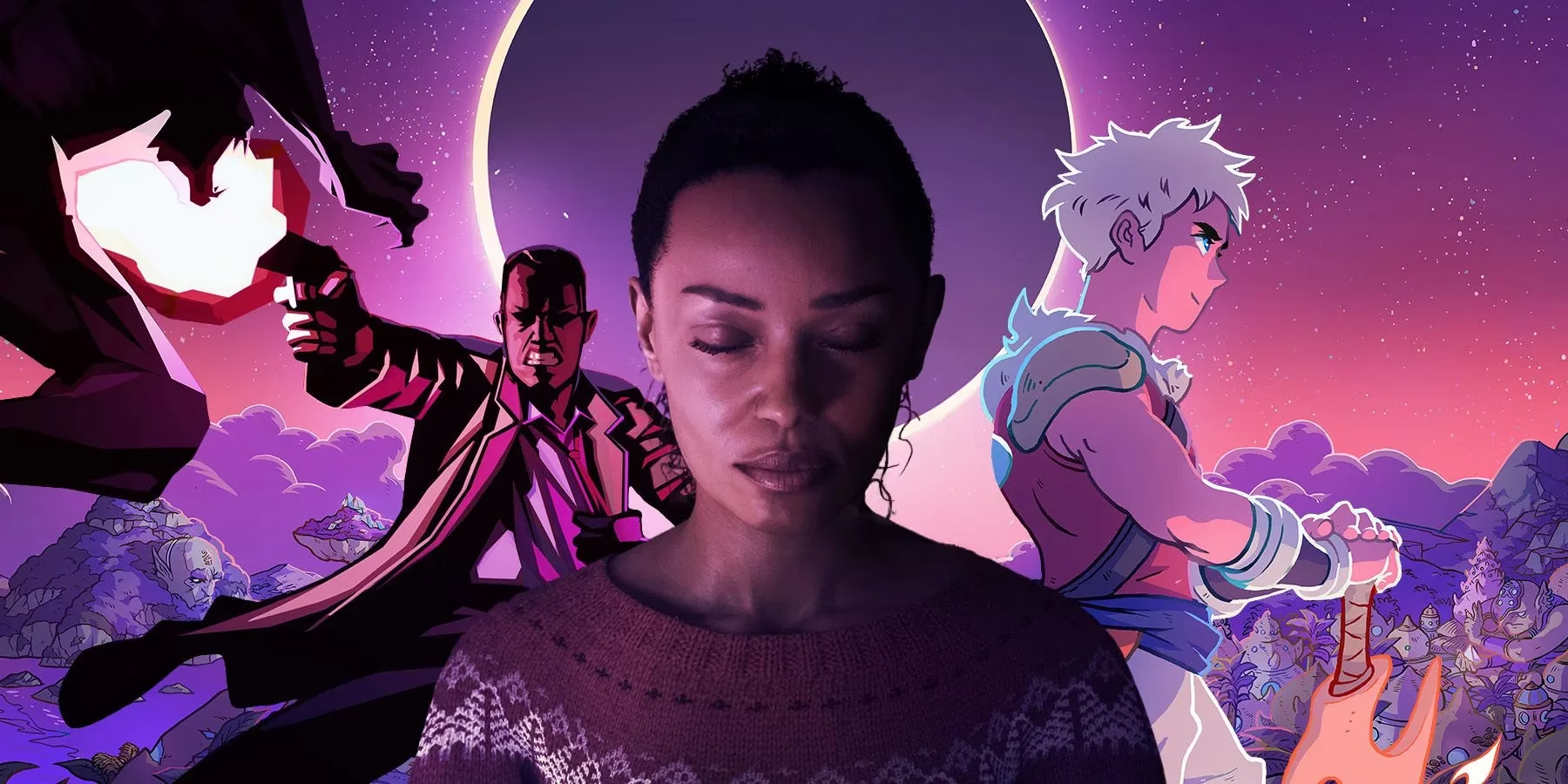
Looking back from 2026, I still find myself humming themes from 2023. That year was an absolute monster for video games, with huge releases landing so close together that I often had to choose carefully what to play next. But while mechanics, visuals, and story all competed for my attention, the one thing that kept pulling me back to each world was the music. A great score does more than fill silence; it colors the entire experience and keeps the player emotionally anchored. From quiet exploration to bombastic superhero battles, 2023 delivered soundtracks that I still consider some of the most memorable in recent gaming history. In no particular order, these are the ten video game scores and soundtracks from 2023 that stayed with me long after the credits rolled.
🎧 A Quick Look at the Standouts
| Game | Why the Music Still Works for Me |
|---|---|
| The Legend of Zelda: Tears of the Kingdom | Powerful low tones and reversed vocal effects add weight to Hyrule |
| Sea of Stars | Chiptune blended with real instruments creates nostalgia and freshness |
| Final Fantasy 16 | Deep emotional motifs and daring experimental battle tracks |
| Super Mario Bros. Wonder | Music constantly adapts to Wonder Flower transformations |
| Star Wars Jedi: Survivor | Captures the Star Wars spirit without simply copying John Williams |
| El Paso Elsewhere | Grunge, hip-hop, and wild west grit create a unique neo-noir mood |
| Marvel's Spider-Man 2 | Cinematic superhero cues and perfectly timed sequence music |
| Hogwarts Legacy | Forms its own magical identity while honoring familiar Harry Potter sounds |
| Alan Wake 2 | Poetic chapter songs and a legendary Old Gods of Asgard sequence |
| Hi-Fi Rush | A rhythm-driven world where everything moves to the beat |
The Legend of Zelda: Tears of the Kingdom
I remember stepping back into Hyrule and immediately noticing how much the sound design mattered. Tears of the Kingdom continues the quiet, atmospheric approach of Breath of the Wild, but it also pushes important moments forward with low, almost physical musical weight. Places like Rito Village and the Temple of Time feel richer because of the careful scoring. The real standout for me, though, is the strange reversed vocal effect woven into many major tracks. It gives the game an otherworldly tension that fits the story's themes of time, curses, and displacement. Boss encounters also benefit from an incredible score that turns climactic highs into unforgettable moments. Even after all this time, the music of Hyrule from 2023 still feels distinct from every other Zelda game I have played.
Sea of Stars
Sea of Stars immediately charmed me because it feels like a love letter to classic RPGs while still sounding completely modern. The soundtrack blends chiptune textures with real instruments, creating a unique mix that is both nostalgic and refreshing. That balance mirrors the game's cozy yet expansive adventure perfectly. I also appreciated how large the soundtrack is. Day, night, and pirate-style tracks exist side by side, giving the world different emotional shades depending on where and when I was exploring. Even battle themes get enough variety that the usual grinding did not wear me down the way it can in other RPGs. Overall, Sea of Stars uses its score masterfully to capture the daring scope of a grand indie role-playing journey.
Final Fantasy 16
As a long-running series, Final Fantasy always carries high musical expectations, and Final Fantasy 16 met them with a dark, hard-hitting score. Even the title screen music uses lower tones to express Clive Rosfield's anguish while still paying tribute to the classic Crystal Theme. I found that depth carried through the entire narrative. Motifs repeat and evolve alongside the cast, with "My Star" appearing during important Jill moments being a particularly striking example. The battle tracks demanded attention, especially the fights against the Eikons. I also loved that the soundtrack was willing to experiment, like Typhon's battle theme blending EDM beats with a fantasy chorus. That mix of weight and experimentation makes Final Fantasy 16 one of the boldest musical entries in the franchise.
Super Mario Bros. Wonder
What impressed me most about Super Mario Bros. Wonder is how dynamic its music feels. The entire game revolves around the idea of wonder, and the score embraces that fully. Every time a Wonder Flower changes a level, the music changes with it. Using an Elephant Fruit adjusts the soundtrack to match the transformation. I still remember Piranha Plants On Parade, where parts of the song change or disappear depending on how many singing enemies are on screen. Even classic Mario tracks like the Underground and Athletic themes received fresh treatments. For a platformer, this level of musical responsiveness made every stage feel alive, experimental, and endlessly playful.
Star Wars Jedi: Survivor
It would be easy to dismiss Star Wars Jedi: Survivor as just more familiar Star Wars sounds, but that familiarity is exactly what makes it special. Gordy Haab and Stephen Barton captured the spirit of John Williams' work without merely imitating him. As I explored the different planets, the music helped each location feel like a natural part of the wider Star Wars universe. The score brought back the emotional weight the original films are known for, grounding Respawn Entertainment's lengthy story in a way that felt immersive rather than derivative. That dedication to the franchise's musical identity is a big reason why Jedi Survivor still stands out to me in 2026.
El Paso Elsewhere
Few games in 2023 surprised me as much as El Paso Elsewhere. The game is a third-person neo-noir shooter with reality-shifting underground floors, and its soundtrack is just as disorienting in the best way. Grunge, hip-hop, and harsh electronic beats meet digitized guitar twangs and wild west instruments. The result is a moody, fast-paced sound that pulls me deeper into James Savage's unstable journey. The music does not just sit in the background; it reflects his drug-warped perceptions and the shifting reality of the motel. The raps, samples, and dubstep cues all hit unexpected notes, giving the game a bold identity that still feels distinct among shooters.
Marvel's Spider-Man 2
Marvel's Spider-Man 2 aims to sound like an interactive superhero movie, and in my experience it succeeds completely. The score is cinematic and dramatic, with brass and horn sections that feel right at home in a superhero blockbuster. Both Miles and Peter receive clear musical cues that signal their moments to shine. One boss fight involving Miles stood out because the music was timed so precisely to the cutscenes that the emotional impact landed even harder. After Spider-Man: Miles Morales established the sound of this universe, Spider-Man 2 elevates it further, making the teamwork between the two Spider-Men feel epic without ever becoming generic.
Hogwarts Legacy
Like Jedi Survivor, Hogwarts Legacy takes inspiration from John Williams, but it takes a different path. Instead of strictly emulating the famous composer, the soundtrack strives to create its own identity while still honoring the magical world. I noticed familiar Harry Potter-style cues, but the score avoids leaning on nostalgia too heavily. That choice works because the game takes place long before Harry Potter's time. The music lets Hogwarts and the surrounding world speak for themselves, creating an adventure that feels authentically magical without depending on the boy who lived. The result is a score that captures the wonder I have wanted from the Wizarding World for years.
Alan Wake 2
Alan Wake 2 moved the series into survival horror, and that shift changed the musical direction in interesting ways. Exploration is often quiet, which makes the key musical pieces hit even harder when they arrive. The game brings back reflective vocal tracks at the end of each chapter, and they fit the struggles of specific characters beautifully. But what truly elevates Alan Wake 2 for me is the sequence involving Poets of the Fall as the Old Gods of Asgard. It ties the two games together in a moment that is both thrilling to hear and fascinating to play. The music uses metaphor and imagery just as much as the writing, making the whole experience feel like a living, breathing story.
Hi-Fi Rush
Finally, Hi-Fi Rush was one of the biggest surprises of the year. The game blends rhythm, platforming, and combat into something completely fresh. Everything hits the beat of the music playing on Chai's chest, so the soundtrack has to be excellent. And it is. The entire world adapts to whatever song is playing. Trees, monitors, platforms, and even enemy attacks move in rhythm. The songs are catchy and adventurous, and I found them stuck in my head long after I turned the game off. I also appreciated the Streamer Mode, which removes copyrighted tracks and replaces them with safe alternatives for streaming.
For me, these ten soundtracks prove that music is not just background decoration. It is a core tool for immersion, storytelling, and emotional impact. Even in 2026, I return to these games not only for the gameplay but also for the sound. 2023 was a truly special year, and its scores remain some of the best I have ever heard.
Data referenced from Statista - Video Games helps frame why 2023’s standout game soundtracks mattered beyond personal taste: with blockbuster release density and a market that rewards long-tail engagement, memorable music becomes a retention tool as much as an artistic one. Looking at titles like Tears of the Kingdom, Final Fantasy XVI, and Hi-Fi Rush, the scores don’t just decorate gameplay—they strengthen brand identity, replay value, and streaming-ready moments that keep players emotionally invested well after launch.
Comments