As a dedicated player, I'm eagerly anticipating the vast, enigmatic world of Pharloom in Hollow Knight: Silksong. The original game captivated me with its haunting beauty and deep lore, set within a civilization of insect-like beings. From what we've glimpsed, the sequel promises an even larger, more intricate kingdom. However, this expansion also means confronting more of the unsettling and disturbing elements that are a hallmark of this universe. The dark undertones and often grotesque enemy designs, while artistically brilliant, can be a significant barrier for some players. Reflecting on recent gaming trends, I believe Silksong could greatly enhance its accessibility and player comfort by adopting a feature similar to Hogwarts Legacy's well-received arachnophobia mode. This thoughtful inclusion would demonstrate a commitment to all players, ensuring that the game's remarkable artistry and challenging gameplay can be enjoyed by a wider audience.
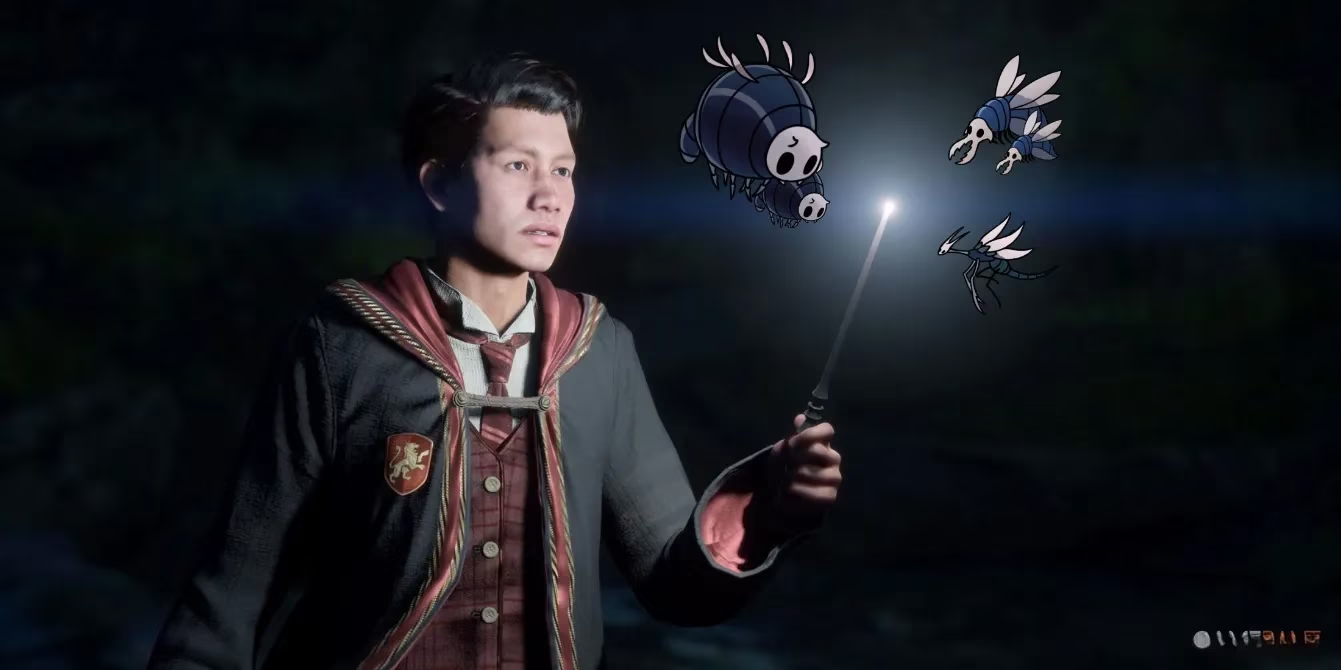
The Need for Enhanced Accessibility in a Bug-Filled World
Pharloom, from the previews and trailers, looks breathtaking yet undeniably eerie. The environments and inhabitants are designed with a masterful blend of beauty and horror, a signature of Team Cherry. For players like myself who revel in this aesthetic, it's a paradise. However, I recognize that for others, especially those with entomophobia (fear of insects), acarophobia (fear of mites/ticks), or even just a general discomfort with creepy-crawly designs, navigating this world could be a source of anxiety rather than enjoyment. The original Hollow Knight already featured its share of unsettling foes, and the sequel is poised to expand on this. An optional mode to modify these elements isn't about diluting the artistic vision; it's about providing a gateway. The precedent set by Hogwarts Legacy is instructive: before its arachnophobia mode was added via a post-launch update, there was genuine discussion about whether the game's realistic spiders would exclude potential players. The developers listened, implemented a toggle that transformed spiders into cartoonish, rolling toys, and in doing so, opened the game to countless more people who could then enjoy the full wizarding experience without distress.
Tangible Benefits for Players and Developers Alike
Integrating a similar feature into Silksong would be a win-win scenario with multiple layers of positive impact. Let's break down the key advantages:
🎮 For Players with Specific Fears:
-
Inclusive Design: It directly addresses a known phobia, making the game psychologically accessible. Players no longer have to choose between enduring discomfort or missing out on a masterpiece.
-
Empowerment & Choice: It puts control in the player's hands. They can tailor the experience to their comfort level, which is a cornerstone of modern, player-centric game design.
🌟 For the Game's Reach and Replayability:
-
Broader Market Appeal: By being openly accessible, the game signals to a wider demographic that it is for them too. This can directly influence purchase decisions and foster a more diverse community.
-
Novelty in Replaythroughs: Such a mode isn't just an on/off switch for fear; it can offer a fresh perspective. Players might be incentivized to replay the game with the mode toggled differently, seeing familiar enemies and areas in a new, often more whimsical light.
💡 For Creative Development:
-
A Canvas for Creativity: This isn't merely a technical task; it's a creative opportunity. The team could reimagine unsettling creatures in unique, stylized ways that become an artistic statement in themselves.
-
Building Intrigue: The very existence of such a mode can generate positive discussion and curiosity, encouraging players to explore both settings to see the differences.
Envisioning Silksong's Unique Take on the Feature
While simply copying Hogwarts Legacy's approach—making enemies cartoonish—would be effective, I believe Team Cherry has the potential to do something even more distinctive. Their signature style could shine through in the design of these "accessibility-friendly" models. Imagine if the affected enemies were transformed not into toys, but into beings crafted from:
-
Geometric Blocks or Pixels: A retro, minimalist aesthetic that abstracts the frightening details.
-
Ethereal Silhouettes: Enemies become shadowy, formless essences, focusing on their movement patterns rather than their anatomy.
-
Ornamental Constructs: Foes that resemble intricate, clockwork machines or stained-glass artworks, fitting Pharloom's gothic and regal themes.
This approach would be less about reducing quality and more about offering an alternative artistic interpretation. It could even be less resource-intensive than creating hyper-detailed alternate models, freeing the team to be more imaginative.
Setting a New Standard for the Genre
By thoughtfully implementing an accessibility mode focused on phobias, Hollow Knight: Silksong could achieve something profound. It would tap into an audience its predecessor couldn't fully reach, ensuring its success is both critical and commercial. More importantly, it would set a powerful precedent. As a fan of Metroidvanias and challenging games, I believe difficulty should come from masterful gameplay and cunning boss design, not from involuntary player discomfort. Silksong has the chance to lead by example, showing that a game can be uncompromising in its challenge and depth while being compassionate and inclusive in its presentation. It would send a clear message: everyone is welcome in the haunting, beautiful world of Pharloom, and no one should be turned away at the gate by fear alone. In 2026, as gaming continues to evolve as a mainstream art and entertainment form, such considerations are not just nice-to-haves; they are markers of a mature, player-respecting industry. I, for one, hope Team Cherry seizes this golden opportunity.
Comments