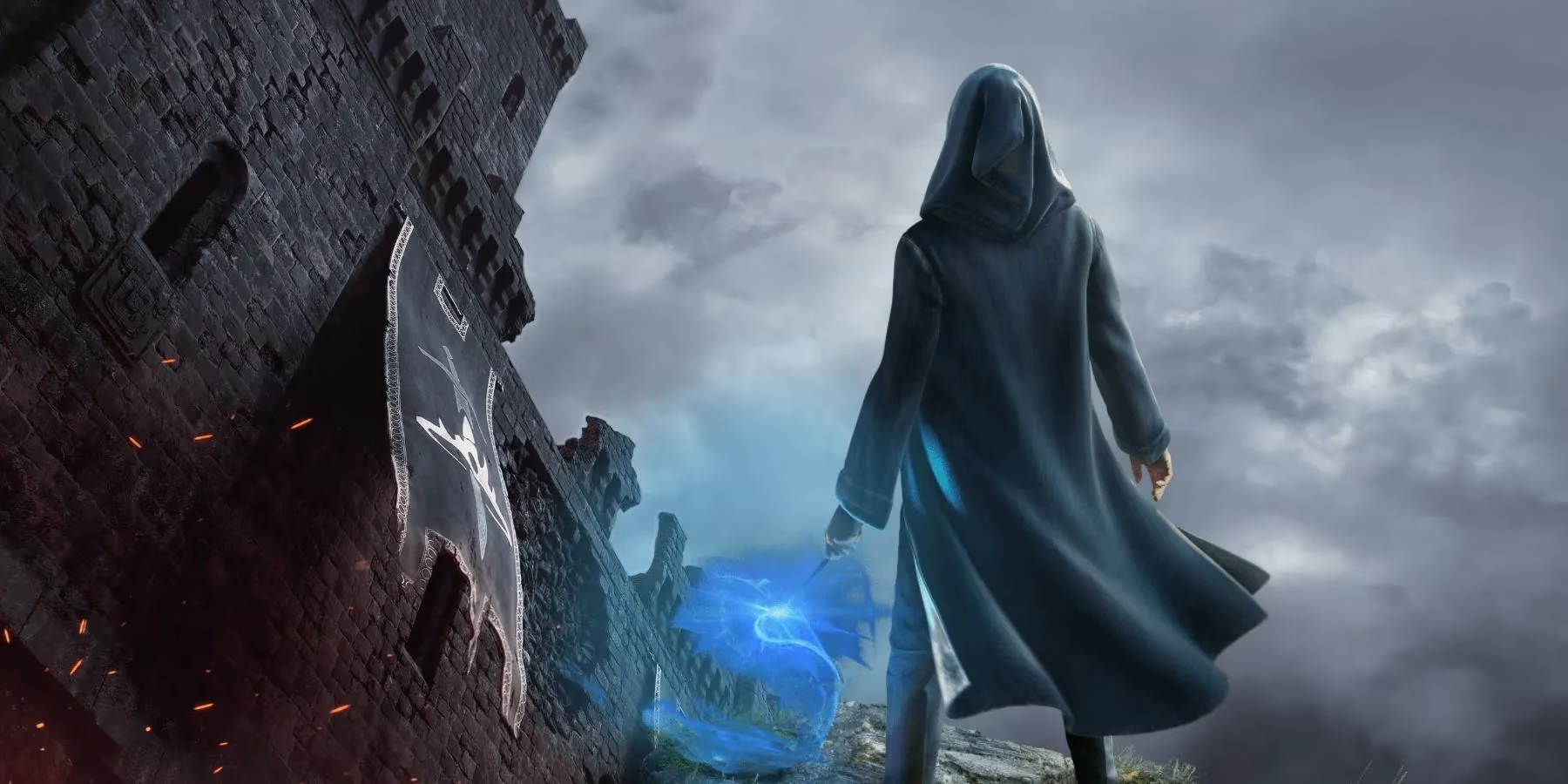
In the ever-expanding world of Eora, a new dawn was rising over the Living Lands. By 2026, Obsidian’s Avowed had become more than just another fantasy action-RPG; it had turned into a quiet revolution of consequence. While the gaming community once whispered comparisons to Skyrim or Hogwarts Legacy, the conversation shifted when players finally got their hands on the game. It wasn't the flashy dual-wield combat or the vibrant, painterly environments that stuck with them the most, though those certainly helped. No, what truly set Avowed apart was the way it looked you dead in the eye and asked, “What are you willing to live with?”
Hogwarts Legacy had its own magic. Imagine stepping into the halls of Hogwarts, wand in hand, with the freedom to learn Unforgivable Curses or choose your house. For a while, that felt revolutionary—a world where you could do anything you wanted. But here's the rub: doing anything without facing consequences quickly made those choices feel like cheap tricks. Declining Sebastian’s offer to learn a curse didn't matter because he'd pop back up later with the same proposition, almost as if the game was saying, “No worries, mate, you can have your cake and eat it too.” Even the grand finale seemed to ignore whether you'd been a saint or a sinner throughout the year. In the end, Hogwarts Legacy gave you the keys to the castle but no real reason to care which door you opened.
Then came Avowed, striding into the arena with a knowing smirk. Obsidian, after all, has a reputation as the master of branching narratives. Just look at The Outer Worlds, where every companion felt like a real person with their own agenda, and every choice carried weight. When the Xbox Developer Direct back in 2024 showcased Avowed’s dialogue system, it was like watching a seasoned chess player set up the board. You could almost hear the game muttering, “Go ahead, pick the charming answer. But don’t come crying to me when that faction you insulted shows up during a critical moment.”
What made Avowed special in 2026 was how it wove consequences into the very fabric of its narrative. This wasn't about a simple morality meter that locked you out of certain dialogue options; it was about the world remembering. For instance, siding with a rebellious group of animancers might grant you powerful spellcasting augments, but it would permanently sour relationships with the local clergy, locking you out of entire questlines and altering how townsfolk reacted. The game didn't just track your decisions—it let them fester. In one particularly memorable moment, a player who had double-crossed a pirate faction found that, hours later, the pirates had razed a village the player was supposed to protect. No quest marker prompted this; it was simply the logical, devastating result of a choice made in haste. “That’s the beauty of it,” the game seemed to whisper. “Every action is a pebble dropped into a lake, and the ripples never quite stop.”
This is where Avowed snatched the crown from Hogwarts Legacy. The Harry Potter RPG laid a foundation—it proved that players loved the illusion of agency. But Avowed built a cathedral on that foundation, with stained glass windows that shattered and rearranged themselves based on your decisions. The endgame wasn't just multiple endings; it was about seeing these endings emerge organically from the dozens of smaller, seemingly insignificant choices you made along the way. In 2026, the inevitable sequel to Hogwarts Legacy was already on the horizon, and rumors swirled that Avalanche was looking at Avowed as a blueprint. After all, if a game could make you feel the sting of your own selfishness, wouldn't that make the moments of heroism feel a thousand times sweeter?
Of course, Avowed wasn't perfect. Some critics argued that the wandplay, while fluid and inspired, still lacked the sheer acrobatic flair of Hogwarts Legacy's spell-chaining. But that felt like missing the point. While you were busy combining Glacius and Diffindo in Hogwarts, Avowed was busy making sure your companion’s loyalty to you was hanging by a thread because of a careless remark you made twenty hours prior. It was role-playing in its purest form, and it had a long memory. As the gaming landscape matured in 2026, players were hungry for stories that treated them like adults, not like tourists on a guided tour. Avowed delivered that in spades, proving that real magic doesn't come from a wand—it comes from the courage to face the mess you made, and the hope that you might just be able to make it right.
Comments