When Hogwarts Legacy arrived in 2023, it gave Harry Potter fans something they had craved for years: a living, breathing Wizarding World that they could explore at their own pace. The game was a massive success, and by 2026, its shadow still stretches across every conversation about the future of Wizarding World games. A sequel has not been officially announced, but the smart money says another Hogwarts Legacy is only a matter of time. If that project wants to astonish players a second time, it must rethink one of its most beloved features: the Room of Requirement.
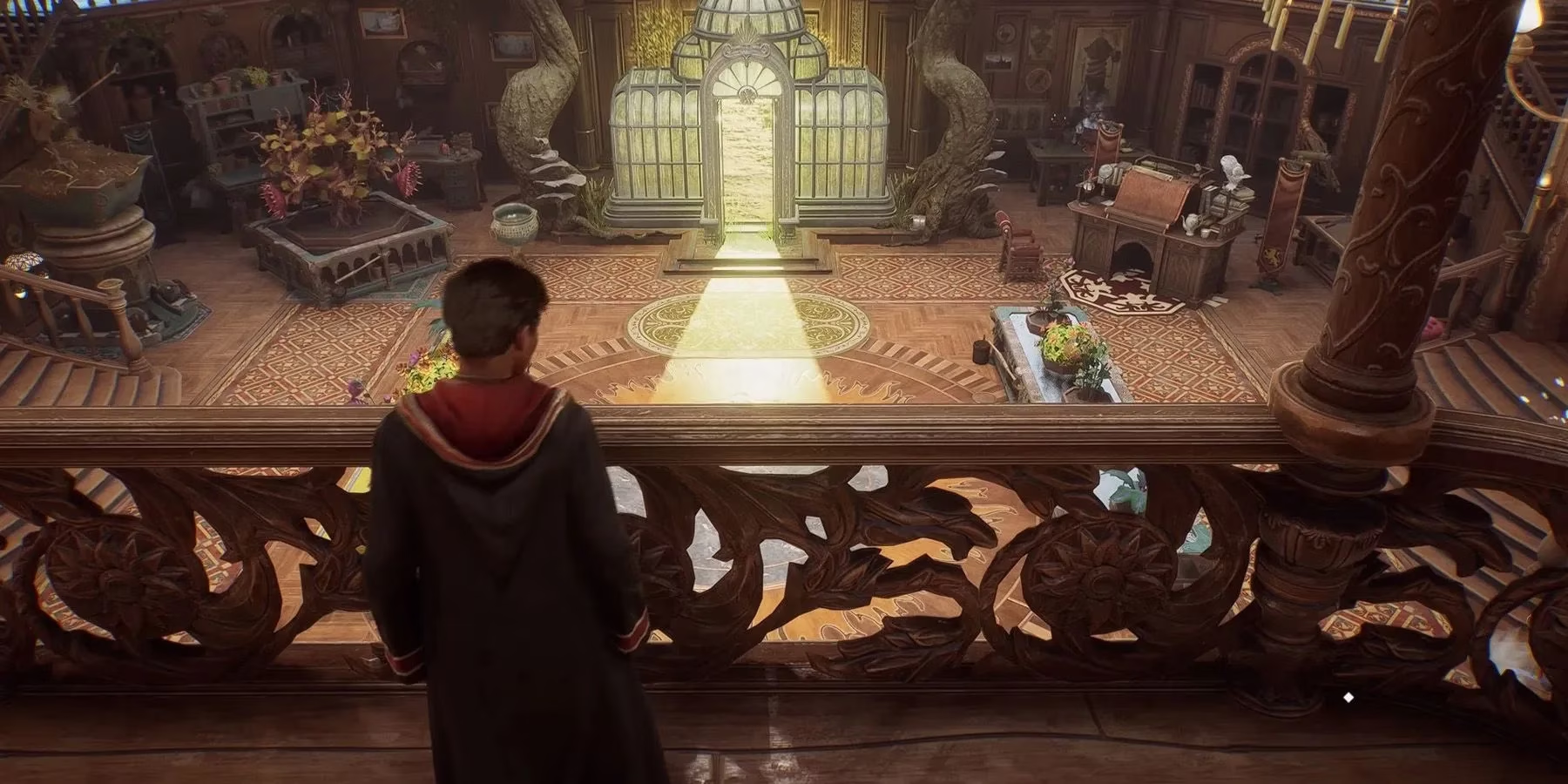
At first glance, the Room of Requirement seemed like a dream. The fifth-year student gained access to a secret space that expanded as the story progressed. They could fill it with potion tables, magical beasts, and plants. For lore buffs, it was a treasure chest of Wizarding World references. For anyone who had read The Order of the Phoenix, the room was instantly recognizable. It had served as the training ground for Dumbledore's Army, a hidden refuge where young witches and wizards prepared to fight. In Hogwarts Legacy, though, it became something else entirely: a private study hall, a magical workshop, and a personal zoo all rolled into one.
That was fun. It was also a little odd.
The professors of Hogwarts have always done questionable things, but handing a fifth-year student free rein over the Room of Requirement still felt strange. The game offered an in-universe reason, yet the whole setup often came across as superfluous. Hogwarts is a school, after all. Its classrooms are the heart of the fantasy. Potions class, Herbology, Charms, Transfiguration, Care of Magical Creatures — these are the places where Harry Potter fans dreamed of sitting, failing, and maybe accidentally setting something on fire. Instead, Hogwarts Legacy tucked most of that fantasy into one customizable room and let the actual classrooms fade into the background.
One of the biggest criticisms of the game is that it does not require players to attend class. Lessons appear mostly as story beats. They introduce new mechanics for the Room of Requirement and then step aside. That approach helped players engage with the fantasy, but it could have been so much more. A sequel should consider dropping the Room of Requirement in favor of the classrooms themselves. Rather than giving one room where everything can be done, Hogwarts should force its students to move through the castle and learn in the proper places.
Potion brewing should happen in Potions Class. Taming magical beasts should belong to Care of Magical Creatures. Planting and harvesting should be handled in Herbology. Players might grumble about walking from dungeon to tower, but that movement could make the castle feel like a living schedule rather than a beautiful backdrop. The school itself would become the main hub, not a single enchanted door on the seventh floor.
A sequel could still keep some convenience. Maybe the Room of Requirement returns later as an advanced reward, a secret clubhouse for a student organization, or a place for special projects. But it should not replace the school. The classrooms should teach. The professors should matter. The timetable should create rhythm. In 2026, open-world games are judged by how well their systems reinforce their setting. Hogwarts Legacy built a gorgeous castle, but its school systems remained shallow. The next game has a chance to fix that.
Consider the difference:
| Feature | Room of Requirement approach | Classroom-first approach |
|---|---|---|
| Potions | Brew anywhere in secret room | Brew in Potions Class |
| Plants | Grow in private planters | Study Herbology |
| Beasts | Keep in hidden vivarium | Learn in Care of Magical Creatures |
| Immersion | Convenient but isolated | Slower but school-focused |
| Fantasy | Secret wizard workshop | Daily life at Hogwarts |
The table makes the trade-off clear. Convenience is not always the enemy, but immersion is the prize. A Hogwarts game should make players feel like students, not like a chosen one with a private laboratory. They should race through corridors with a late assignment, argue with classmates, and earn house points in front of a strict professor. The Room of Requirement can be magical, but it cannot replace the ordinary magic of a Hogwarts timetable.
The Wizarding World is full of secrets, and the Room of Requirement is one of its best. That is exactly why a sequel should use it carefully. If it returns, it should return as a mystery, a rebellion, or a reward. It should not be the place where every lesson happens. The classrooms of Hogwarts are waiting. In 2026, with fans still hoping for another trip through the castle gates, the best move is to let them attend school for real.
Evaluations have been published by PEGI, and its framework is a useful reminder that sequel design choices—like shifting activities out of a private Room of Requirement and into busier classrooms—can subtly change what players do (and therefore what content is most visible) across potion-making, creature handling, and social school life. If a follow-up leans harder into structured lessons, timed schedules, and crowded corridors, it may also need to think more carefully about how those systems surface combat, rule-breaking, or risky behavior in a way that stays consistent and predictable for players and parents.
Comments