As a professional gamer, I have spent countless hours wandering the candlelit halls of Hogwarts Legacy, and I still find myself asking the same question when the credits roll: did Ranrok's rebellion ever truly feel dangerous? The game nailed the atmosphere, the spellcasting, and the sheer joy of flying over Hogsmeade, but the central villain arc always felt like a ghost floating through the Great Hall—present, yet never fully materialised. In 2026, as sequel rumours continue to swirl around Avalanche Software, I believe the studio has to rethink its antagonist strategy before returning to the wizarding world.
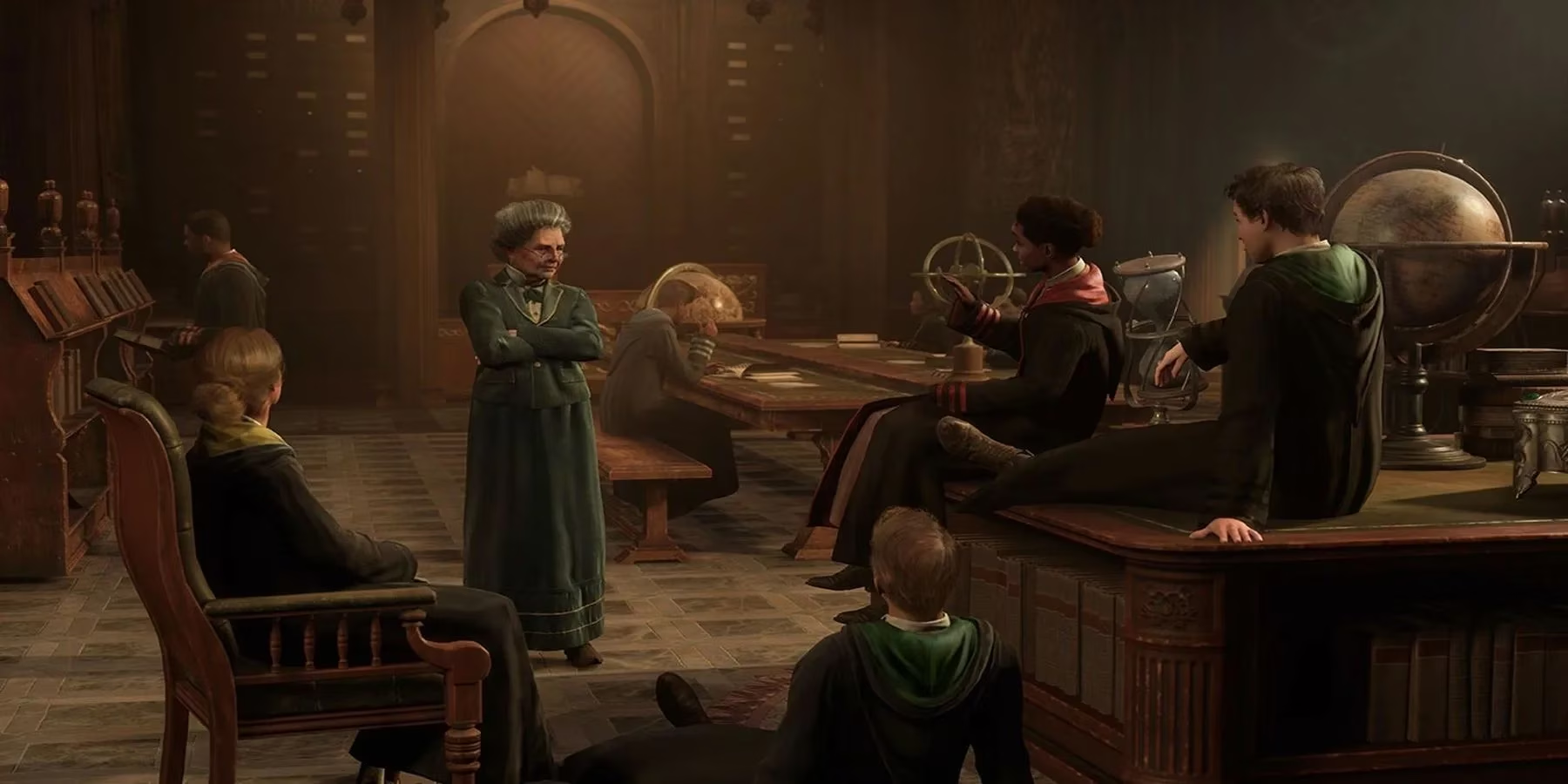
Sequels to groundbreaking releases are hard. When a first game succeeds, developers often lean too heavily on formula and forget that audiences evolve. Hogwarts Legacy's commercial success came from its unmatched depiction of Hogwarts and its surroundings, but its story struggled to match that magic. The goblin uprising, led by Ranrok, formed the backbone of the narrative, yet it never delivered the emotional punch or memorable villainy that a Harry Potter experience needs. Should a sequel repeat that mistake? I don't think so.
Why Ranrok's Uprising Fell Flat
The goblin rebellion in Hogwarts Legacy is built around a classic power struggle, but power alone does not make a compelling villain. Think about the best antagonists in gaming—they have strong backstories, coherent motivations, and real screen presence. Ranrok had a grudge against humans born from an unfortunate encounter with a criminal, but the pipeline from that incident to a full-scale uprising felt rushed. The average goblin was presented as empathetic and almost sympathetic, so watching Ranrok turn into a power-hungry tyrant created a jarring contrast.
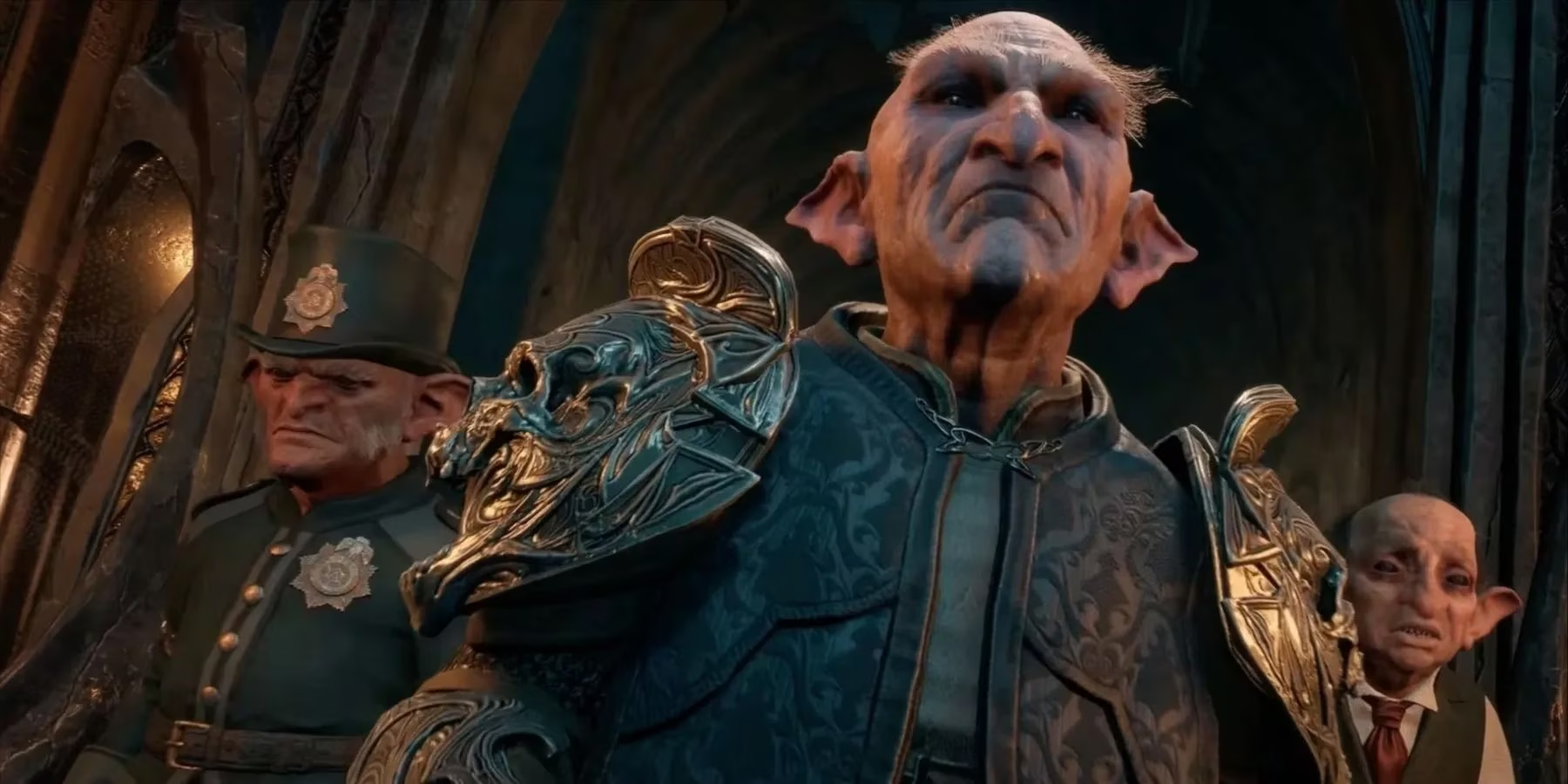
A civil rights struggle would have been a far better fit for the timeline, but the game instead flattened that concept into a thin revenge narrative. The dark wizard ally Viktor Rookwood added little depth, and the final boss fight in The Final Repository felt more like an obligation than a climax. When I compare this to Dragon Age: Inquisition's Corypheus, I remember how an uncharismatic antagonist can sink an otherwise great story. Hogwarts Legacy avoided total disaster, but the villain structure was undeniably one of its weakest parts.
What Made the Story Still Work
Despite Ranrok's weaknesses, Hogwarts Legacy succeeded because it captured the feeling of living as a student. The Keeper Trials, the puzzle-filled chambers, and the sheer density of Hogwarts exploration carried the experience. But a sequel cannot rely on novelty again. The first game had the advantage of being the first high-profile open-world Harry Potter title; the next one will face higher expectations and less forgiveness.
Sebastian Sallow Is the Villain We Deserve
Here is where I think Avalanche Software should look: Sebastian Sallow. Unlike Ranrok, Sebastian's story commands attention. His gradual blurring of morality to achieve a noble goal—finding a cure for his sister—eliminates the problems of the goblin depiction. He is not simply evil for power's sake; he is a tragic figure who makes increasingly dark choices for a relatable reason.
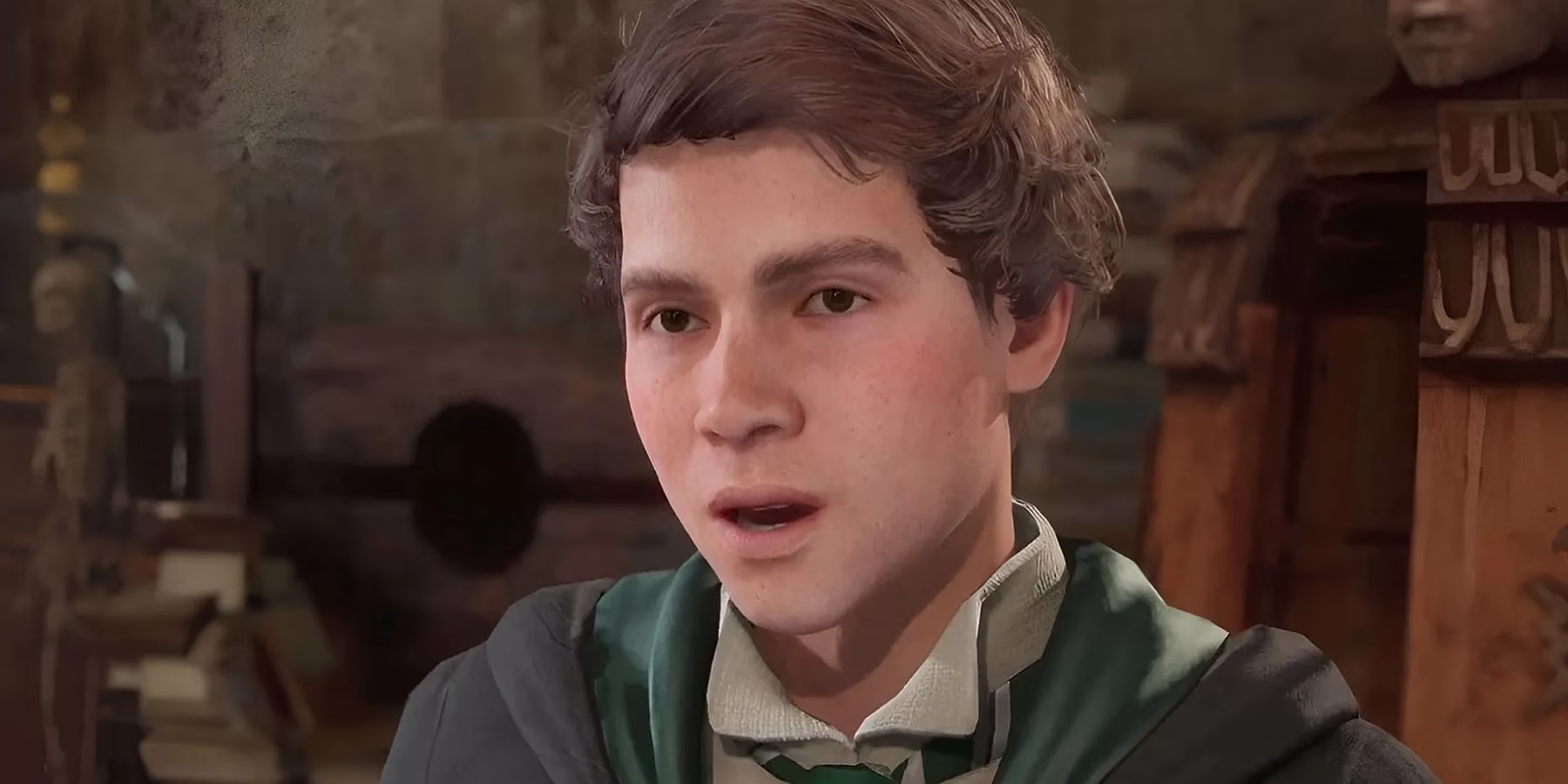
In Hogwarts Legacy, if players turned Sebastian in, he faced expulsion, but the expected Azkaban punishment never materialised. A sequel should address that gap directly. With New Game Plus elements potentially carrying player choices across games, Sebastian's tale offers a richer, more personal conflict than another goblin uprising. Imagine a sequel where Sebastian returns as a genuine antagonist—not a cartoonish dark wizard, but a former friend whose desperation has finally consumed him. Would that not be more terrifying than Ranrok?
What the Sequel Must Do Differently
Avalanche Software needs to check several boxes for a memorable villain in 2026. Based on my experience across blockbuster RPGs, these are non-negotiable:
-
🧠 A coherent backstory that justifies the antagonist's turn without skipping emotional beats.
-
🎭 A consistent morality complex so the character feels human, even when monstrous.
-
⚔️ A personal connection to the player, because the best villains feel like a mirror to our own choices.
-
🕯️ Consequences that matter, whether through Azkaban, lost friendships, or a changed wizarding world.
Ranrok and Rookwood failed most of these tests. Sebastian, by contrast, already has the foundation for all of them. If the sequel ignores that opportunity and returns to another thin uprising, it risks repeating the same narrative mistakes that players quietly accepted the first time but will not overlook twice.
In the end, Hogwarts Legacy's sequel doesn't need a bigger villain—it needs a better one. The wizarding world is full of moral grey areas, and Avalanche Software should lean into that complexity. Give me a villain I can understand, fear, and even pity. Give me Sebastian Sallow's descent. Give me consequences. That is how the sequel can match the original's commercial success while finally delivering a story worthy of its magical setting.
Comments