In 2026, Avalanche Software's Hogwarts Legacy remains one of the most discussed Wizarding World games, and its launch reputation has not faded: critics praised its faithful recreation of the Hogwarts experience, and the market rewarded it with booming financial success. A key part of that fantasy is the Sorting Hat ceremony, which the player controls. Yet the mystery-shrouded sequel may be better off without this particular freedom. Is player choice always a virtue in an RPG, or can it quietly weaken the story a sequel needs to tell?
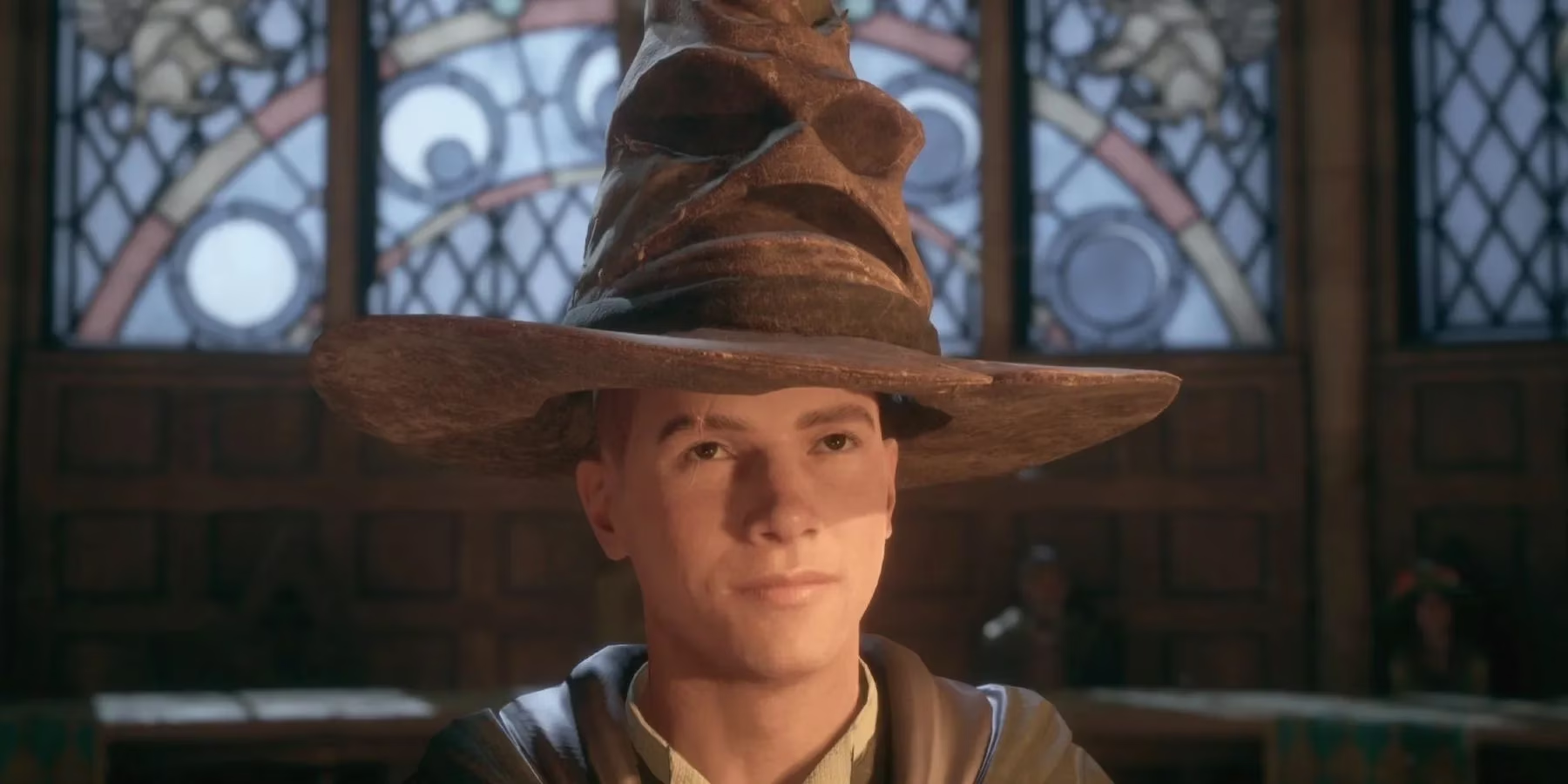
Hogwarts Legacy is built around freedom within the Harry Potter world. Fulfilling the fantasy of being a Hogwarts student was clearly a top priority for Avalanche, and that priority produced many worthwhile features. At the same time, freedom can be a double-edged sword. The Unforgivable Curses are the clearest example: they were added at the cost of depth and immersion because they can be used without consequence. The same issue extends to the story, which can feel emotionally distant and shallow. A sequel could remedy these problems by removing a few elements of choice.
The Sorting Hat Looks Better Than It Plays
At first glance, house selection seems like one of the game's most promising features. After choosing a house or accepting a recommended one, players receive an exclusive house robe and access to a distinct dormitory. NPCs occasionally remark on the player character's house, and each house has a special robe obtainable later. However, aside from each house's exclusive quest, there is little that is unique beyond superficial details. The main story and almost every side quest remain the same regardless of house. Beyond rare mentions, NPCs do not treat the player character differently.
That stands in stark contrast to other Wizarding World media, where Hogwarts houses represent deep connections to heritage and personality. Rivalries, prejudices, and even family feuds are tied to them. In Hogwarts Legacy, school houses are a much more trivial matter. The player character can just as easily befriend a Slytherin as a Gryffindor, which makes the choice feel somewhat meaningless. Just like the consequence-free dark arts options, house choice sacrifices long-term world-building and storytelling at the altar of short-term satisfaction. The freedom to choose a house is great on the surface, but it ultimately makes for a less impactful and detailed role-playing experience.
A Predetermined House Could Deepen the RPG
A predetermined Hogwarts house in the sequel would offer less freedom from the jump, but it could pave the way for better storytelling opportunities and impactful choices throughout the game. The protagonist in Hogwarts Legacy is designed to fit in with any house and is thus rather bland and inoffensive. The sequel should take risks with its protagonist, making the hero more defined like Commander Shepard from Mass Effect or Geralt from The Witcher. Would a more authored hero really rob players of role-playing? Perhaps not: a defined character can have a memorable personality shaped in subtle ways through player choice, rather than serving as a one-size-fits-all avatar.
Not only would the player character be more interesting if written as part of a specific house, but the number of meaningful choices could also increase. By decreasing the scope of the game through the removal of house choice, the sequel could make real consequences for player decisions, something the first game lacked. Then again, Hogwarts Legacy has done remarkably well, so the sequel probably will not mess with the formula too much.
| Design area | Hogwarts Legacy approach | Potential sequel approach | Storytelling effect |
|---|---|---|---|
| Sorting Hat | Player selects any house | Predetermined house | Stronger identity and stakes |
| House identity | Robe, dormitory, one quest | Deeper traditions and tensions | Richer world-building |
| NPC reactions | Rare remarks | Persistent house-based bias | More believable school life |
| Consequences | Dark arts mostly consequence-free | Choices with lasting fallout | Greater emotional weight |
| Protagonist | Flexible, inoffensive avatar | Defined hero with authored traits | Memorable character arc |

The debate matters because Hogwarts Legacy already proved that the fantasy has enormous commercial pull. In 2026, the game is available on PC, PS4, PS5, Xbox One, Xbox Series X/S, and Nintendo Switch, and its audience remains broad. A sequel does not need to abandon everything that worked. It could keep exploration, spell combat, and the pleasure of roaming the castle while treating house placement as a narrative commitment rather than a cosmetic toggle. Would players accept a narrower opening if it produced a sharper story? That is the central question for the next chapter. For now, the strongest argument is simple: the Sorting Hat should matter more than a robe and a dormitory. 🎩✨
Comments