As 2026 drags on without a whisper of a follow-up, Hogwarts Legacy is starting to feel less like the Chosen One of video game adaptations and more like a Flobberworm stuck in treacle tart—sticky, immobile, and desperately in need of a rescue. The 2023 release tore through sales charts like a Niffler hoarding galleons in a vault of ambiguity, leaving Call of Duty and Rockstar titles blinking in disbelief. Yet here we stand, three years later, with Avalanche Software’s magical RPG suspended in a narrative no-man’s-land, caught between the established cinematic canon and a looming HBO TV series that could rewrite the Wizarding World rulebook. The game’s monumental success—top-selling title of its year, the first non-CoD/Rockstar chart-topper in over a decade—deserves more than a quiet fade into lore purgatory. A sequel announcement isn’t just fan service; it’s the only way to stop a cultural lumos from flickering out.
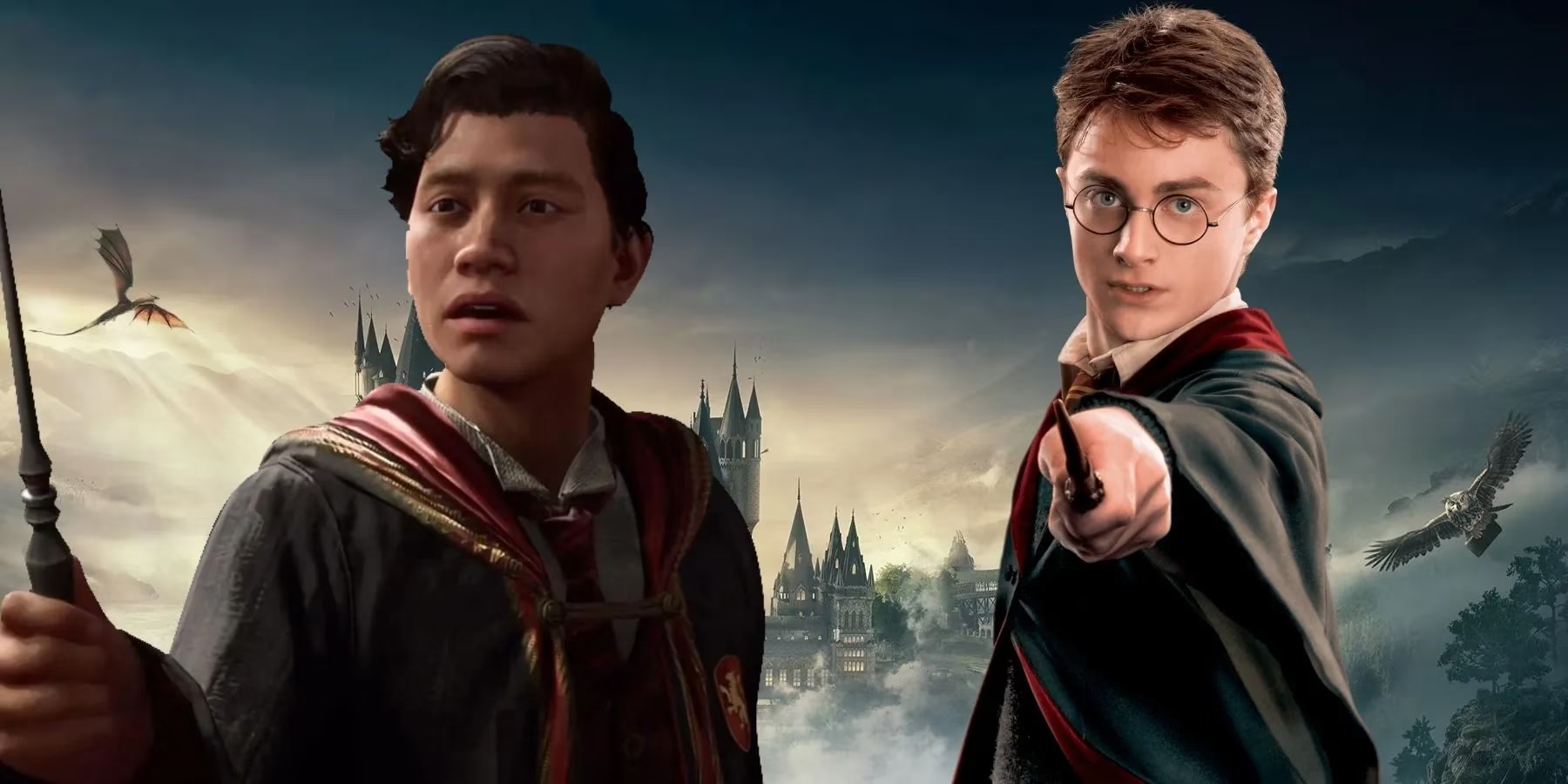
The situation resembles a wizard trying to Apparate with a second-hand wand: unpredictable and liable to splinch your own relevance. Hogwarts Legacy boasted a beautiful open world, spell-slinging combat, and a protagonist who could wield ancient magic like a toddler with a flamethrower, but its place in the Harry Potter tapestry has always been murky. The game is set a century before Harry’s birth, which meant it could sidestep direct narrative collisions. Yet without a sequel to solidify this era as a distinct gaming timeline, the title sits in the franchise as awkwardly as a Muggle at a potions symposium—tolerated, but never truly integrated. The announcement of a proper follow-up would do more than signal content; it would declare independence, creating a parallel universe where the games write their own rules, unfettered by the films or the coming HBO reimagining.
Speaking of HBO, the television reboot hangs over the Wizarding World like a Great Hall ceiling enchanted with a storm. Little is known about how the series will adapt the books or expand the lore, but it promises to reset audience expectations. For Hogwarts Legacy, this development is less a golden snitch and more a Blast-Ended Skrewt: dangerous, unpredictable, and capable of explosive canon damage. If the TV series rewrites fundamental magical laws or character histories, the game risks looking like an alternate fan-fiction rather than a complementary experience. A swift sequel reveal—"swifter than a Golden Snitch on espresso," one might say—would let Avalanche Software say, "This is our world, and we’re not asking for permission." By establishing a game-centric continuity, the studio transforms two titles into a
self-sufficient ecosystem, much like a pair of enchanted mirrors reflecting only each other. The films and shows become separate portraits; the games become a living landscape.
The longer Warner Bros. and Avalanche delay, the more fragile the foundation becomes. In 2023, Hogwarts Legacy enjoyed a cultural tailwind, yet it also weathered considerable criticism—technical hiccups, debates over its place in J.K. Rowling’s contested legacy, and the absence of a Quidditch mode that felt like a Howler left unanswered. A sequel isn’t a guaranteed victory lap; the IP’s reputation is as volatile as a Fwooper’s cry. Waiting until 2027 or beyond risks the cultural tide shifting entirely, leaving a follow-up stranded like a message in a bottle bobbing on a sea of irrelevance. Already, fan conversations are drifting toward the HBO series, and gaming audiences are notoriously fickle—today’s open-world marvel is tomorrow’s dusty Skyrim port. Announcing a sequel now, even with a distant release date, would anchor the franchise. It would tell the world that the 2023 game wasn’t a one-off experiment but the first step into a larger magical world—a world with its own Dark Arts trees, its own Room of Requirement expansions, and its own narrative weight.
Consider the psychological effect: without a sequel, Hogwarts Legacy becomes the Pete Best of the Wizarding World—present at the start but written out of the main story. That’s a cruel fate for a game that outsold expectations and proved that a solo Harry Potter adventure without Harry could enchant millions. A well-timed announcement would give fans something to theorize about beyond TV casting rumors, and it would offer Avalanche Software a chance to respond to the original’s shortcomings. Better yet, it would let the dev team wink at the camera and say, "We heard you liked unforgivable curses—how about an entire morality system built around them?" The momentum is there, but momentum, like a poorly brewed Polyjuice Potion, has an expiration date.
In the end, Hogwarts Legacy stands at a crossroads between becoming a cherished pillar of a growing game franchise or a lonely footnote in a multimedia empire that moves on without it. The game’s magic was real—its halls echoed with the footsteps of players who’d waited their whole lives for a Hogwarts letter. But magic fades without purpose. A sequel announcement in 2026 would be the incantation that reassures fans: Accio continuity. It would ensure the games don’t linger in lore limbo, a ghost permanently barred from the feast. Avalanche Software has already proven it can build a castle; now it’s time to show that the castle has many towers, and we’ve only climbed the first.
Comments