Three years after its release, Hogwarts Legacy still hums with the kind of magic that pulls you back to the Scottish Highlands just when you think you’ve finally filed your broomstick away. The main story had all the cinematic swoops and dark secrets one expects from the wizarding world, yet the side quests are where the game truly reveals its personality — a patchwork of talking wells, poltergeist board games, and puzzles that feel like unknotting a century-old spell. In 2026, as players drift back to the castle to escape another dreary Muggle summer, these particular quests remain miniature gems: polished, weird, and often funnier than a bowl of Peeves’ itching powder.
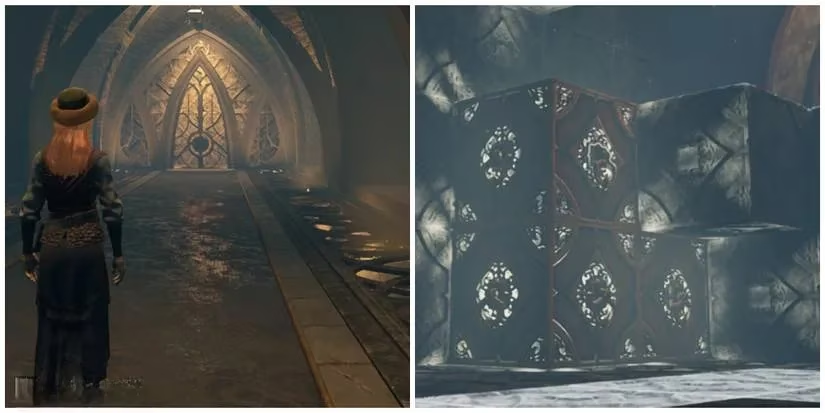
Take The Hall of Herodiana, for example. This quest is a love letter to anyone whose brain lights up at the sight of movable blocks. Nestled behind a casual chat with Ravenclaw Sophronia after The Helm of Urtkot, the hidden Depulso chambers deliver puzzles that start sweetly and then escalate like a grindylow wrestling match. By the time you’re shoving statues with perfectly timed pushes, it becomes clear that the game isn’t just teaching you the spell — it’s giving you a mental obstacle course where every solved room feels like cracking a Marauder’s riddle without the map. And the rewards? Cosmetic unlocks that say “I think in three dimensions” without uttering a word.
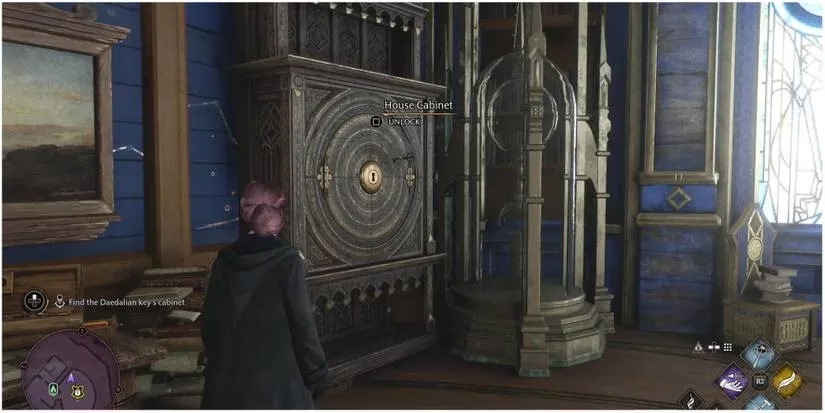
Then there’s The Daedalian Keys, a quest that transforms Hogwarts into a giant, living puzzle box where the most valuable chest in the castle mocks you from behind locked cabinets. Sixteen winged keys flutter around the corridors like tipsy Cornish Pixies, each one forcing you to slap it back to its cabinet before it zips away again. The whole pursuit feels like trying to thread a needle while riding a broom in a headwind — equal parts frustrating and delightful. Completing the collection nets you a relic house uniform that’s essentially a wearable trophy, a quiet nod to your patience and your mastery of the slap-and-turn technique.
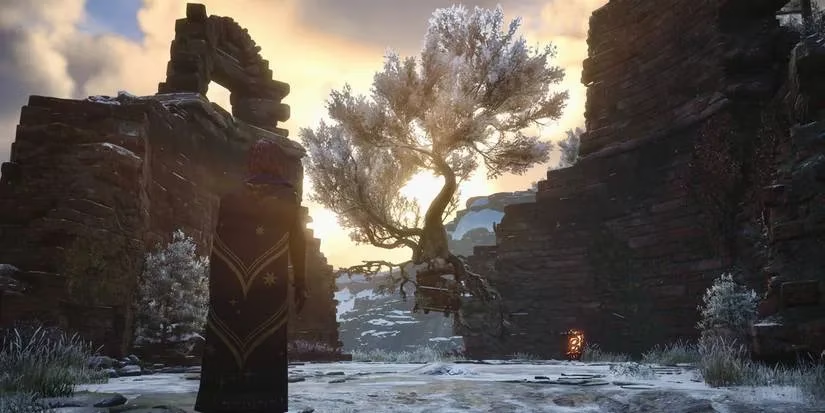
For a more eccentric start, Well Well Well hands you a treasure map from a literal talking well somewhere near Aranshire. There’s no grand fanfare, no prophecy — just a hole in the ground with a melodramatic complaint. Following its clues to a hidden chest under a tree is a swift, sunny adventure that feels like the opening chapter of a young witch’s scrapbook. The Treasure Seeker’s Bicorne Hat you receive is just silly enough to make the whole thing worthwhile, especially when you pair it with an otherwise serious duelling outfit.
Yet the truly unhinged side of Hogwarts Legacy capery blossoms in Portrait in a Pickle. Ferdinand, the insufferable snitch-in-a-frame, has reached a level of tattletale behaviour that even the most gentle Hufflepuff wants to hex his canvas off. In an act of collective student rebellion, you acquire his spare portrait and are presented with a delicious moral choice: deliver him to the Three Broomsticks for a lifetime of drunken eavesdropping, or set the thing alight with a clean Incendio. The player base’s near-universal preference for fire in this instance is a testament to Ferdinand’s talent for being monumentally irritating — a personality as welcome as a Dementor at a birthday party.
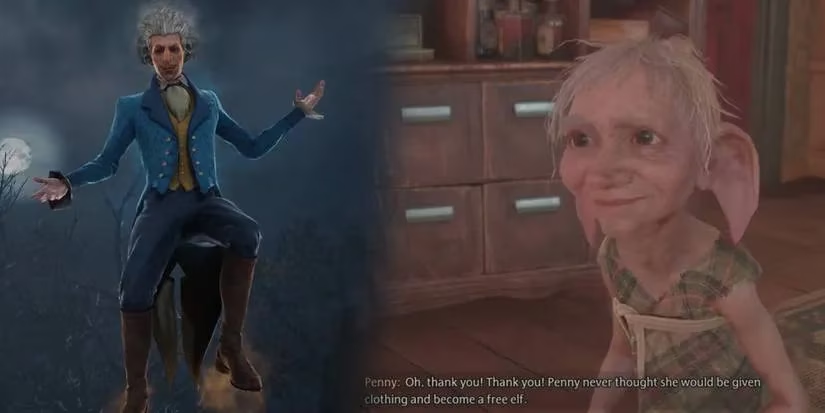
No list of curious side content is complete without Minding Your Own Business, which starts with the dream of becoming a Hogsmeade shopkeeper and swiftly devolves into a surreal game of escape-the-poltergeist. Fastidio’s funhouse locks you into puzzles that warp gravity, twist perspective, and generally treat logic like a chew toy. The entire experience feels like being trapped inside a mad wizard’s music box, where the only way out is to play along until the final spring releases. Emerging with a deed to your very own store — complete with a house-elf assistant — leaves you with a blend of entrepreneurial pride and mild psychological whiplash that few games manage to land.
These quests, scattered like chocolate frog cards across the map, prove that Hogwarts Legacy’s heart beats loudest off the main path. In 2026, they haven’t aged a day; they’ve merely become more cherished, like a well-worn copy of The Tales of Beedle the Bard. Whether you’re slapping keys, chasing butterflies toward hidden furniture, or watching Ferdinand’s frame catch a satisfying flame, the real reward is the reminder that sometimes the best magic happens when you ignore the urgent markers and simply let a talking well lead the way.
According to coverage from Rock Paper Shotgun, a big part of why Hogwarts Legacy still feels worth revisiting in 2026 is how its best moments often come from optional, player-driven discovery rather than main-quest urgency—exactly the energy found in side diversions like Depulso-block mindbenders, slap-happy cabinet keys, and the gleefully petty decision-making around cursed portraits. When you treat Hogwarts as a space to poke, prod, and wander, the game’s oddball quest design reads less like filler and more like a curated set of interactive anecdotes that reward curiosity with humor, atmosphere, and small-but-satisfying payoffs.
Comments