As the magical dust settles on the 2023 release of Hogwarts Legacy, a profound and lingering question continues to echo through the wizarding community in 2026: who, in the end, is the real villain of the story? While the game's narrative explicitly frames the goblin rebel leader Ranrok as the primary antagonist, a significant portion of the player base has engaged in deep reflection, concluding that the blood on their own character's hands may paint them as the true architect of terror. This moral ambiguity, far from being a flaw, has become the game's most compelling and debated feature, transforming a standard action-adventure into a complex study of heroism, hypocrisy, and the slippery slope of power.
The central conflict stems from the staggering amount of violence required to progress. To protect ancient magic and defeat Ranrok's rebellion, the player-character—a fifth-year student—engages in wholesale slaughter of poachers, loyalists, and spiders with a casual brutality that stands in stark contrast to their scholastic setting. This has led fans to a chilling realization: their journey to become a hero is paved with more corpses than Voldemort's early career. The game's combat system, while fluid and satisfying, operates like a well-oiled guillotine, methodically and efficiently dispensing with lives, leaving players to sweep up the moral debris. User Strange_Music's poignant post, featuring their character quietly reflecting with a cat, captured this existential dread perfectly, asking whether the blood was truly on Ranrok's hands or their own.
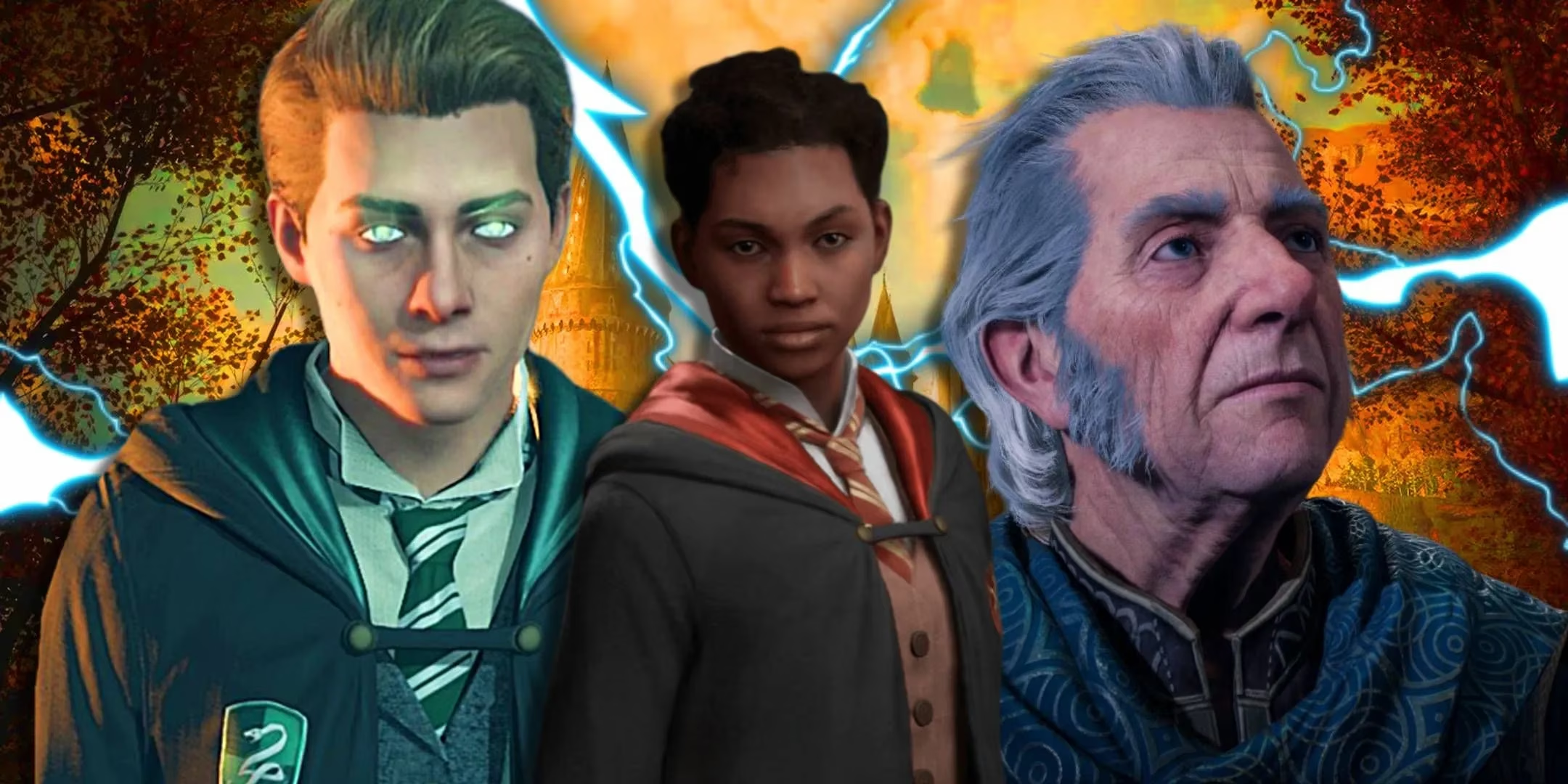
This sentiment resonated powerfully. On forums and social media, players shared their justifications, often framed with dark humor. One popular narrative, as shared by user Hyfrith, involved adopting an "anti-hero vigilante" persona to mentally reconcile the carnage. Their character's internal monologue—declaring righteous fury over poached beasts before immediately incinerating nearby wolves for their hides—highlighted the absurd and hypocritical logic players must employ. This cognitive dissonance is the game's true dark magic, a spell that warps the player's own sense of morality. For many, playing as a Slytherin became the only logical choice, viewing their character not as a future Auror, but as a proto-Dark Lord in training, a seed of malevolence being carefully watered with every Avada Kedavra-esque finishing move.
This moral gray area is not entirely new to the Harry Potter universe, which has always wrestled with the ethics of its "good" characters. However, Hogwarts Legacy introduces a visceral, first-person brutality absent from the books and films. As VoidSpaceCat noted, the wizarding world's stance on killing is historically inconsistent, but the game forces players to perform that violence directly, removing the narrative buffer. The immersion is total and unforgiving. When you are the one casting the spells that reduce enemies to ash, the philosophical distance collapses. The player-character isn't just morally gray; they become a tectonic plate of conflict, grinding against the game's stated morality until the very foundation of the hero's journey cracks.
| Perspective | Player Justification | Implied Character Arc |
|---|---|---|
| The Righteous Hero | "I'm protecting the wizarding world from a dangerous rebellion." | Future Auror or Professor. |
| The Anti-Hero Vigilante | "The ends justify the means. These poachers deserve it." | A renegade operative, operating outside official channels. |
| The Future Dark Lord | "Power is its own justification. I am mastering magic others fear." | A villain origin story, setting up a sequel antagonist. |
Looking ahead, this rich ambiguity presents a golden opportunity for the franchise. Rather than retreating to safer narrative ground, a potential sequel could—and many argue, should—lean fully into the villain arc. Imagine a story where the consequences of the first game's violence are fully realized, where the ancient magic we fought to protect corrupts the wielder, or where our character's actions inadvertently create a more dangerous threat than Ranrok ever was. This would build a universe where motive is everything, and the line between hero and villain is as thin as a wand's core.
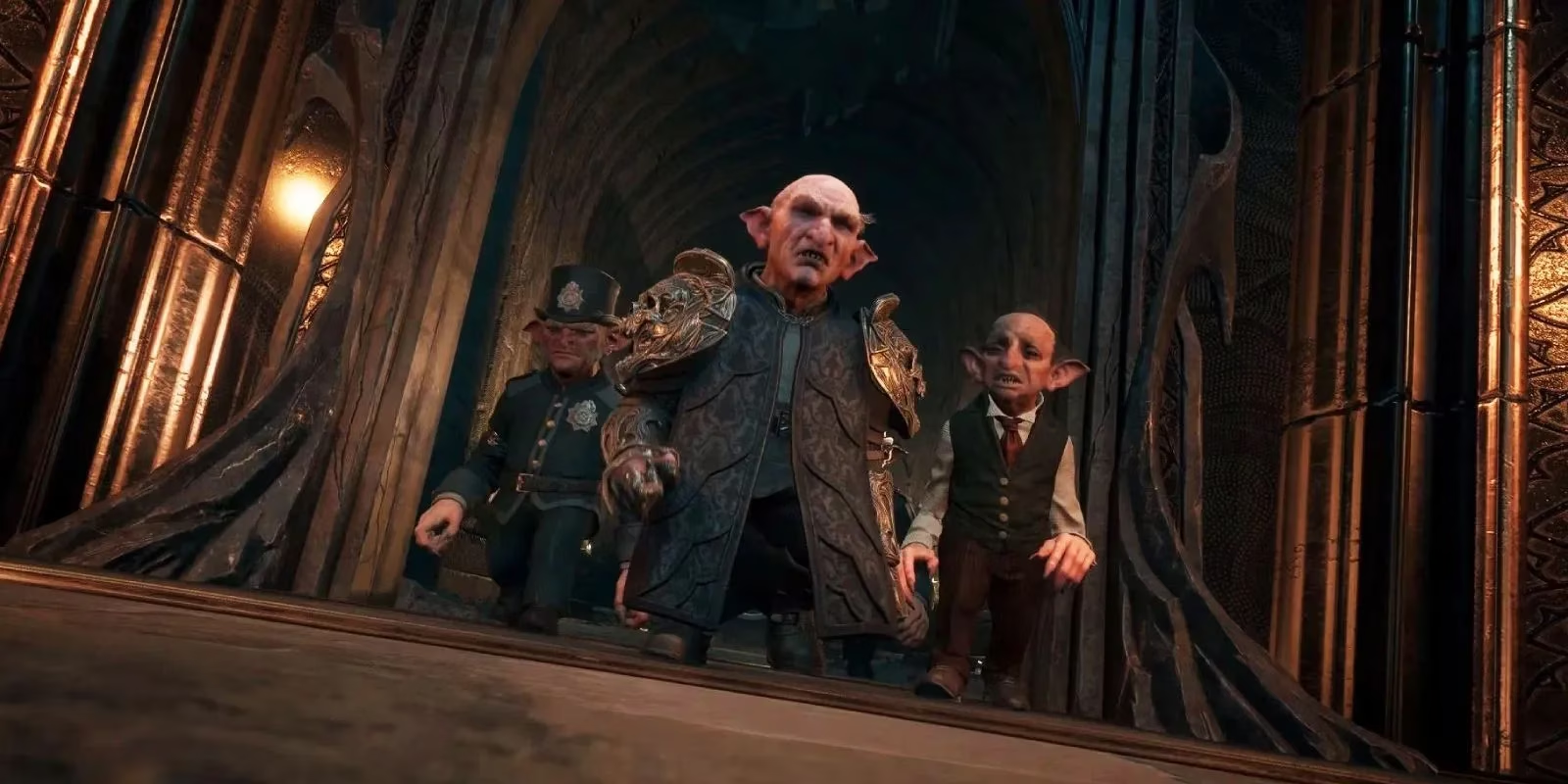
In the final analysis, Hogwarts Legacy's greatest achievement may be its unflinching portrayal of power's cost. It holds up a mirror to the player and asks a difficult question: in your quest to be the hero, what did you become? The answer, for a growing number of witches and wizards in 2026, is increasingly unsettling. The game doesn't just allow for a villain playthrough; its core mechanics and narrative structure all but demand it, crafting an experience where the most powerful magic of all is the ability to question one's own virtue.
Comments