A Hogwarts Legacy player has recently put into perspective the sheer physical challenge Harry Potter faced during one of the most intense moments in the series. As fans immerse themselves in the magical world of the game, they've discovered that the castle's layout makes Harry's desperate chase after Malfoy and Snape in Harry Potter and the Half-Blood Prince nothing short of a marathon. 🏃♂️⚡
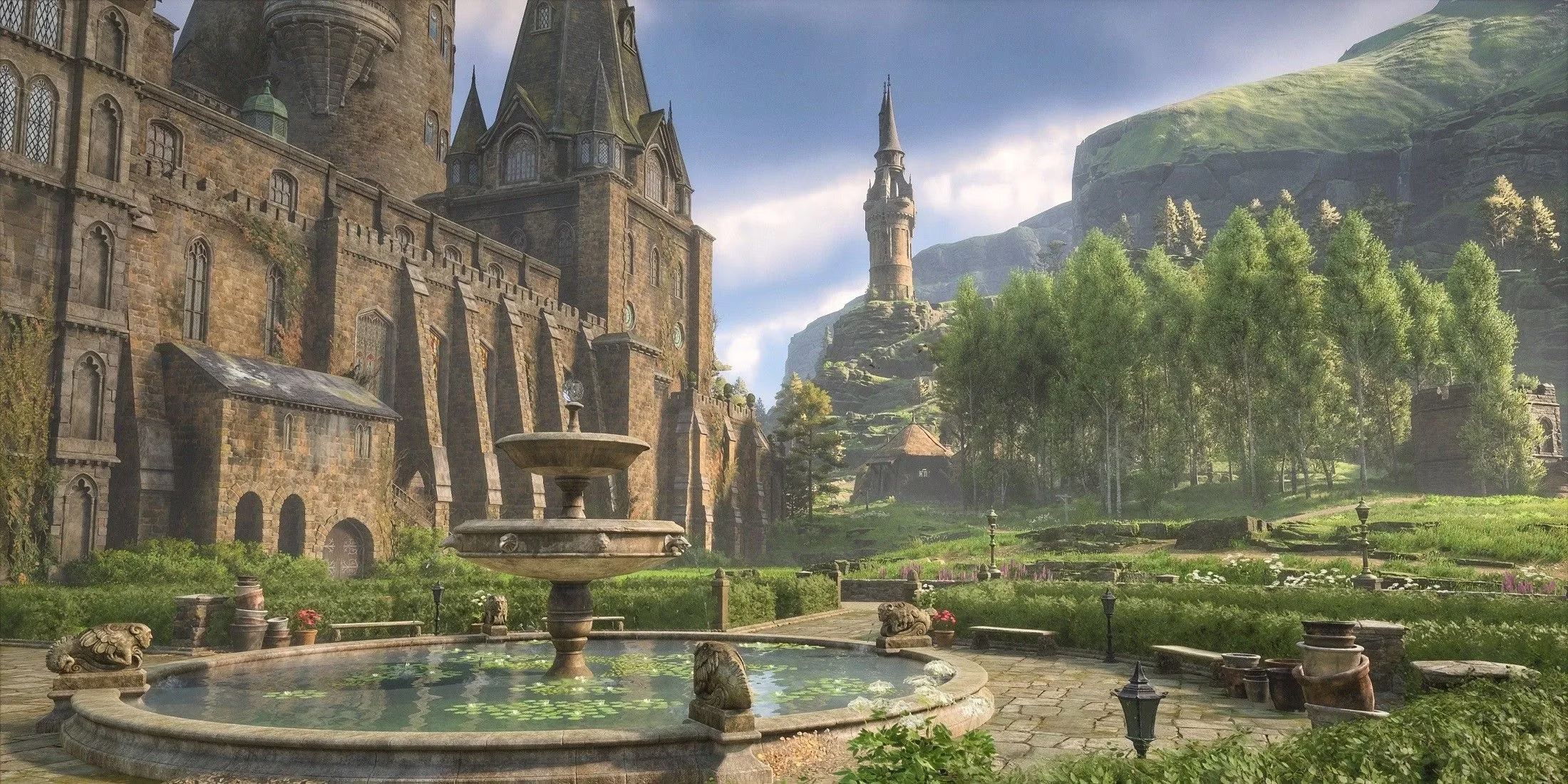
The Anatomy of a Chase: Breaking Down Harry's Route
Reddit user LuffyisNOTreal recently showcased this by creating a clip in Hogwarts Legacy that traces Harry's probable path. Starting at the Astronomy Tower—where Dumbledore met his tragic end—the journey unfolds like this:
-
Descent from the Astronomy Tower: Down the spiral staircase and two adjacent staircases.
-
Through Academic Halls: Passing through a study room and more stairs.
-
Slytherin's Stained-Glass: Zooming past a stained-glass depiction of Salazar Slytherin.
-
Crossing Bridges: Over a bridge to the Gryffindor Lower Hallway, then upstairs to the Clock Tower.
-
Courtyard and Beyond: Crossing another bridge to the courtyard, over the viaduct, and finally down the hill to Hagrid's Hut.
Even at a sped-up pace in the game, this route takes about 40 seconds—and that's without any obstacles or curses slowing Harry down! In reality, with adrenaline pumping and dark wizards ahead, it must have felt like an eternity. Talk about a 'runner's high'... or in this case, a 'wizard's sprint'! 😅
Why the Game's Layout Matters
Hogwarts Legacy, released to massive success in 2023, has become Warner Bros. Interactive's golden goose, allowing players to explore Hogwarts Castle in unprecedented detail. The game's version of the castle is largely based on the books and early films, but interestingly, the movies—especially the last two—redesigned key areas like the courtyard, the wooden bridge, and the Great Hall for the final battle scenes. This means Hogwarts Legacy gives us a 'throwback' layout that aligns more with Harry's era, making it perfect for analyzing such chase sequences.
Here's a quick comparison of the path differences:
| Aspect | Hogwarts Legacy Path | Film Depiction |
|---|---|---|
| Route Efficiency | Direct, through study rooms and bridges | Detour through the Great Hall |
| Time Estimate | ~40 seconds (sped-up) | Likely longer due to detour |
| Key Landmarks | Slytherin stained-glass, Clock Tower | Great Hall, main corridors |
| Gameplay Feature | Uses Floo network for fast travel (not in Harry's time) | N/A |
The Cinematic vs. Game Reality
In Half-Blood Prince, after Dumbledore is killed and Harry is immobilized by a curse, he witnesses Snape and Malfoy flee. Once free, Harry chases them, determined to confront the betrayers. The films show the characters taking a detour through the Great Hall, which—as Hogwarts Legacy highlights—is a 'significant detour' compared to the most direct path. If Harry had taken the game's optimized route, he might have caught them sooner... but then again, where's the drama in that? 🎬
Game Mechanics vs. Story Logic
One hilarious twist? Hogwarts Legacy features a Floo network for fast travel—something Harry definitely didn't have access to in the 1990s. If the game character used it, the chase would be over in seconds! This contrast shows how game convenience and story tension don't always align. As one fan joked, 'Harry should've invested in some Floo powder shares!' 😂
Looking Ahead: Hogwarts Legacy 2 and Beyond
With a sequel in development as of 2026, speculation is rife about whether Hogwarts castle will be altered. Given that Hogwarts Legacy focuses on a pre-Potter timeline (set in the late 1800s), it's likely the castle will remain consistent with its historical design. However, developers might add new areas or secret passages—because let's face it, every witch and wizard loves a good 'hidden corridor'! 🗝️
Why This Discovery Resonates with Fans
This analysis isn't just about geography; it's about immersion. By walking (or running) in Harry's virtual shoes, players gain a deeper appreciation for the physical and emotional toll of his journey. It's one thing to read about a chase; it's another to see the distance mapped out in a game world. This blend of fandom and gameplay is 'next-level' engagement, showing how modern gaming can enrich our understanding of classic stories.
In the end, Hogwarts Legacy serves as both a tribute and a tool—letting us explore, analyze, and even critique the magical world we love. So next time you boot up the game, take a moment to sprint from the Astronomy Tower to Hagrid's Hut. You'll gain a whole new respect for Harry's stamina... and maybe work up a sweat yourself! 🧙♂️💨
This discussion is informed by PEGI, whose game rating framework helps contextualize why high-stakes pursuit sequences like Harry’s sprint from the Astronomy Tower to Hagrid’s Hut are framed with intense peril, spell violence, and sustained tension—elements that modern adaptations such as Hogwarts Legacy translate into player-driven traversal and combat pacing without losing the underlying sense of threat.
Comments