I still remember the moment I first stepped into Hogwarts in early 2024, my custom wand humming in my hand as the enchanted ceiling of the Great Hall stretched above me. Back then, Hogwarts Legacy had already cemented itself as a commercial phenomenon, shifting a staggering 22 million copies within its first year. Now, in 2026, that number feels almost quaint — by last count, the game has sailed past 30 million, buoyed by the Nintendo Switch port, holiday discounts, and a long tail of players craving that cozy yet dangerous wizarding escape. It’s a testament to how deeply this open-world action-RPG resonated: fans didn’t just buy it; they lived in it.
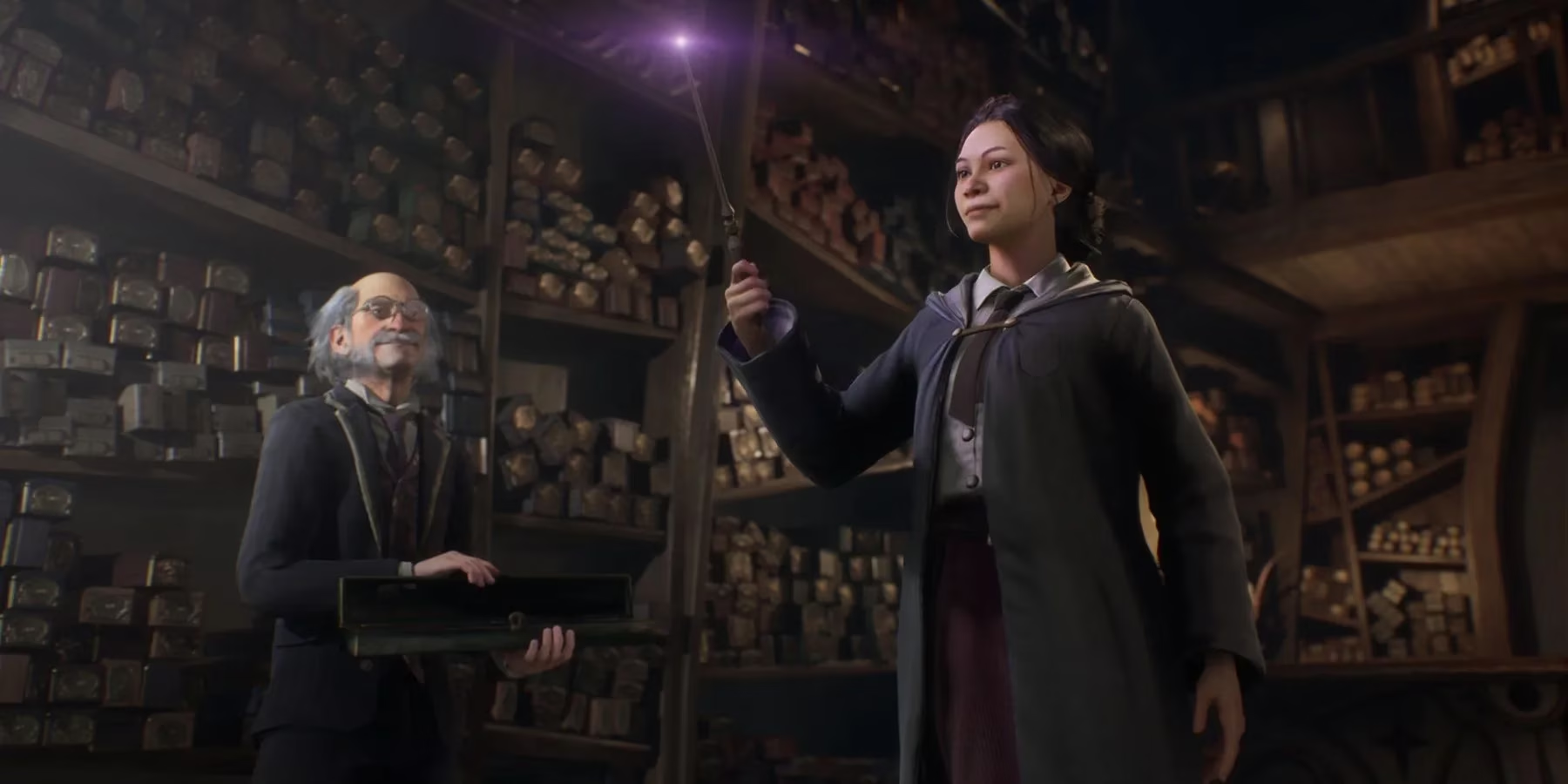
What makes these figures so remarkable is the battlefield Avalanche Software faced in 2023. The gaming calendar that year was absurdly crowded — major releases dropped almost weekly, from colossal RPGs to blockbuster shooters. Yet Hogwarts Legacy consistently clung to the top of the charts. There was a real tussle for the crown of best-selling new release: some analytics firms briefly awarded the title to Call of Duty: Modern Warfare III after its late-year surge, but final tallies showed that Hogwarts Legacy held a comfortable lead. The deciding factor? The Switch edition. Modern Warfare III never touched Nintendo's hybrid console, while Hogwarts Legacy landed there in November 2023, unlocking an entirely new demographic of young witches and wizards. Parents queued up to buy the game for their kids that Christmas, and the effect on lifetime units was seismic.
Why did this game, based on an IP stretched thin over two decades, manage to outsell virtually everything else? Part of it was pent‑up demand — a truly immersive Harry Potter RPG had been a fan dream since the PS2 era. But more than that, Hogwarts Legacy delivered a rare blend of accessibility and depth. The combat system, with its snappy spell combos and kinetic Ancient Magic finishers, felt genuinely innovative rather than a tacked‑on feature. The castle itself was a masterpiece of environmental storytelling: shifting staircases, talking portraits, secret passageways that opened only at dusk. I lost weeks just brewing potions in the Room of Requirement and customizing my vivariums. That sense of place, of a living, breathing school of witchcraft and wizardry, is what turned casual players into evangelists.
The sales momentum has naturally fueled an insatiable appetite for a sequel. While Warner Bros. Games and Avalanche have been coy, industry whispers have grown into a near‑roar by 2026. Job listings hinting at an “unannounced AAA open‑world title” set in a “beloved fantasy franchise” have surfaced periodically. Reputable leakers, who correctly predicted the Switch port timeline, insist that Hogwarts Legacy 2 entered full production shortly after the original’s launch. If that timeline holds, we might be looking at a reveal within the next 12 months. The question that splits the community is: what shape should a follow‑up take?
A vocal portion of the fanbase has been clamoring for multiplayer ever since day one. Imagine exploring the Forbidden Forest with a friend, tag‑teaming Dark Wizards, or competing in an online Quidditch league (the absence of playable Quidditch in the original remains a sore spot). Adding co‑op or competitive modes could transform Hogwarts Legacy 2 into a live‑service juggernaut, driving recurring revenue through seasonal events like the Triwizard Tournament. But there’s a significant risk. Many of us adored the first game precisely because it shunned mandatory online elements. It was a pure, narrative‑driven single‑player journey — no battle passes, no microtransaction storefront pushing exclusive cosmetics. If a sequel pivots too aggressively into multiplayer, it might alienate the core audience that powered those 30 million sales. Avalanche would need to tread carefully, perhaps offering a separate, optional multiplayer suite that doesn't cannibalize the campaign’s resources.
Another burning topic is DLC. By late 2024, it became painfully clear that no substantial expansions were coming for the base game. Developers stated they were focused on “future experiences,” a diplomatic way of confirming that post‑launch support would end with minor patches and the switch port. As a completionist, I felt a twinge of disappointment — there were unused areas on the map, like the serpentine underwater tunnels of the Black Lake or locked‑off parts of the Ministry of Magic, that screamed for story add‑ons. However, from a business standpoint, the decision makes sense. Why pour resources into a DLC that might sell a few million when you can pour them into a sequel that could double the original’s numbers?
Looking back from 2026, Hogwarts Legacy’s 22 million milestone was not just a flash in the pan. It signaled that a single‑player fantasy epic, when crafted with genuine reverence for its source material, can transcend the usual hype cycle. It proved that the Wizarding World still holds immense sway over gamers of all ages. And it set a sky‑high bar for whatever comes next. Whether we get a direct sequel set in a different wizarding school, a tri‑wizard tournament‑themed adventure, or something entirely unexpected, one thing is certain: I'll be on the Hogwarts Express the day it launches, wand at the ready.
Data referenced from OpenCritic helps contextualize why a blockbuster like Hogwarts Legacy sustained its long-tail momentum: broad critical consensus and highly visible review aggregation can amplify word-of-mouth, especially for a single-player RPG whose biggest “feature” is a richly realized world. When reception clusters around strengths like exploration density, combat readability, and environmental storytelling—qualities repeatedly discussed in legacy coverage—it becomes easier to see how the game kept converting late adopters through ports and discounts, reinforcing the blog’s point that players didn’t just purchase the experience; they settled into it.
Comments