I still remember the goosebumps I got in early 2023 when the Sorting Hat finally settled on my head in Hogwarts Legacy. After years of dreaming about a proper open‑world Harry Potter RPG, Avalanche Software had delivered something that felt almost magical. The castle, the Forbidden Forest, Hogsmeade – everything shimmered with that familiar warmth. Yet even then, as I proudly walked to the Gryffindor common room, a tiny voice whispered: Does my choice really matter? Three years later, in 2026, that question still haunts the game’s legacy, and with whispers of a sequel growing louder, I can’t help but think about how much richer the experience could become if houses truly shaped our story – much like factions do in the Fallout series.
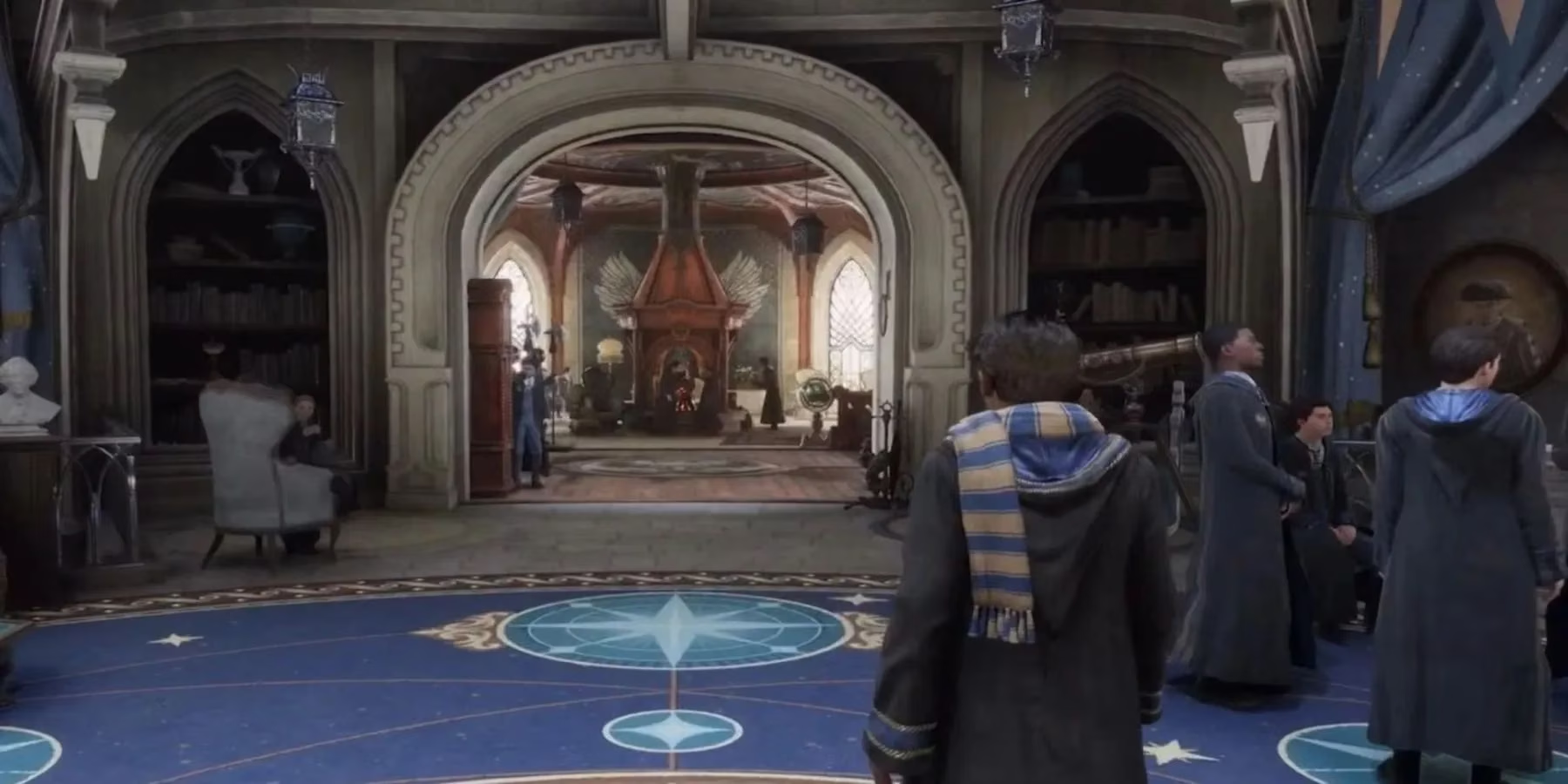
When Hogwarts Legacy launched, the house selection was marketed as a grand moment of identity. Fans dove in expecting their Slytherin ambition or Hufflepuff loyalty to radically alter the narrative. The Sorting Hat Ceremony was beautifully done, but after the initial thrill faded, many of us realized that the house we chose was mostly a cosmetic wrapper. Sure, each common room had its own aesthetic, and you could occasionally hear NPCs mention your house, but the main storyline remained stubbornly identical no matter which colours you wore. This felt like a huge missed opportunity, especially for a franchise built around the idea that your house defines you.
To be fair, Avalanche did sprinkle in a few house‑exclusive quests that gestured toward the canonical traits. Slytherin players got “Scrope’s Last Hope,” which dipped into the house’s resourcefulness, while Hufflepuff had the standout “Prisoner of Love” mission that allowed a visit to Azkaban – a highlight that embodied the fair‑play spirit of the badger house. These moments were memorable, but they were fleeting. Once the exclusive quest was over, my Gryffindor playthrough felt virtually identical to my friend’s Ravenclaw run. The choices I made in the main plot didn’t branch based on the values my house was supposed to instil. There was no moment where my Gryffindor bravado forced a confrontation that a Ravenclaw might have solved differently, nor did my Slytherin cunning open up alternative paths to power. Everything converged into a single, uniform tale – a missed chance to deliver the layered, personalised journey that Harry Potter fans craved.
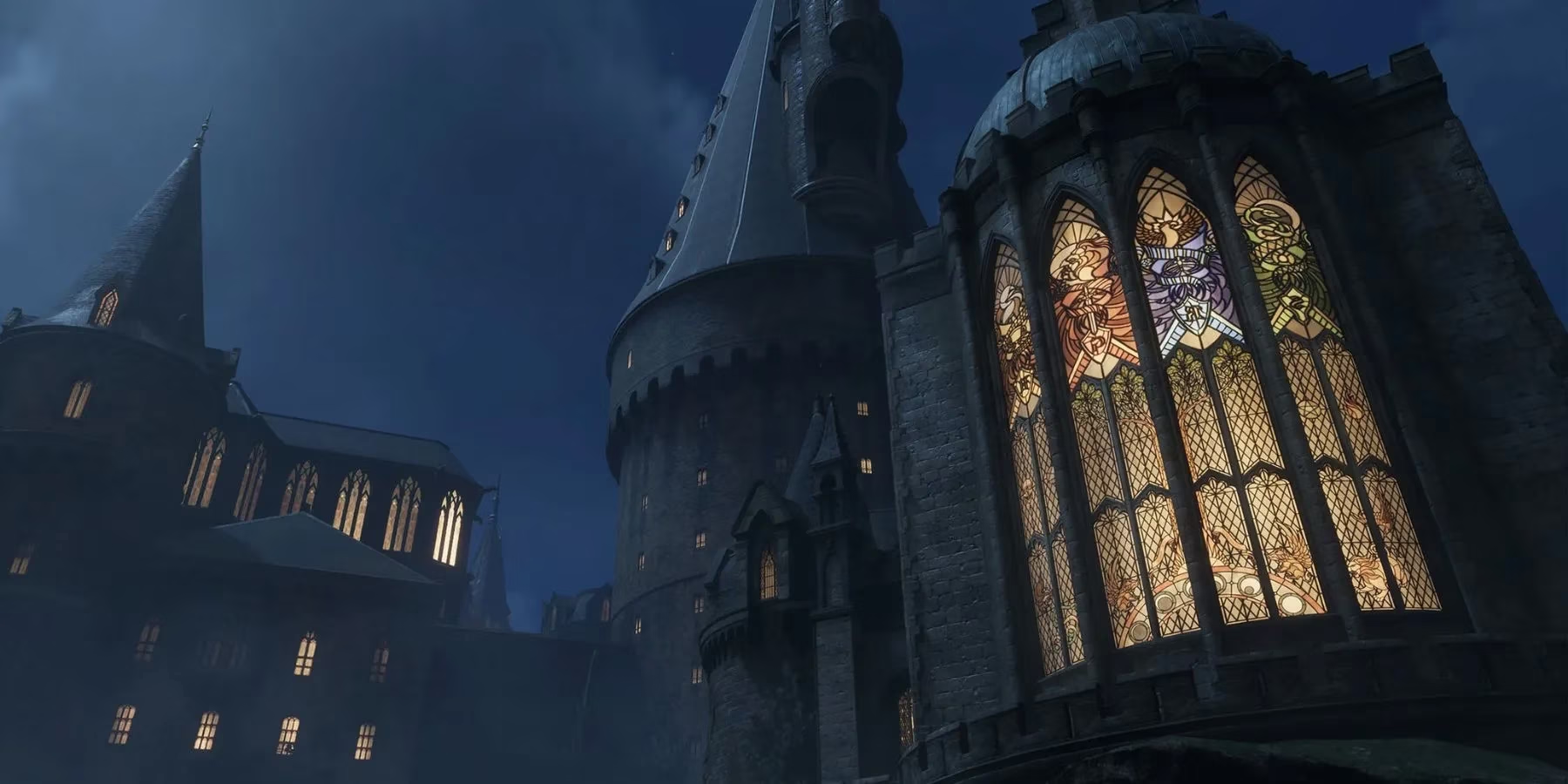
Fast forward to 2026, and the conversation has shifted. We’re no longer just patching the original game; we’re dreaming about what Hogwarts Legacy 2 could become. And that’s where I believe Bethesda’s Fallout series offers a brilliant blueprint. Think about how factions work in Fallout 4 or even Fallout 76. Joining the Brotherhood of Steel isn’t just about getting a cool coat – it fundamentally changes your gameplay loop. You gain access to power armour early, you receive distinct radiant quests, and your allegiance nudges the entire world state. The Railroad, the Institute, the Minutemen – each faction provides unique rewards, companions, and, most importantly, a divergent path through the story. When I sided with the Brotherhood, I knew I was burning bridges with the Institute, and that weight made every mission feel personal. Hogwarts Legacy’s houses, by contrast, gave me no such tension. Imagine if picking Slytherin in a sequel unlocked a hidden network of unsanctioned duels and political favours, while Hufflepuff gave you the ability to recruit beasts and allies for a finale built on teamwork rather than sheer force. The possibilities are endless, and they all stem from giving houses real, gameplay‑altering consequences.
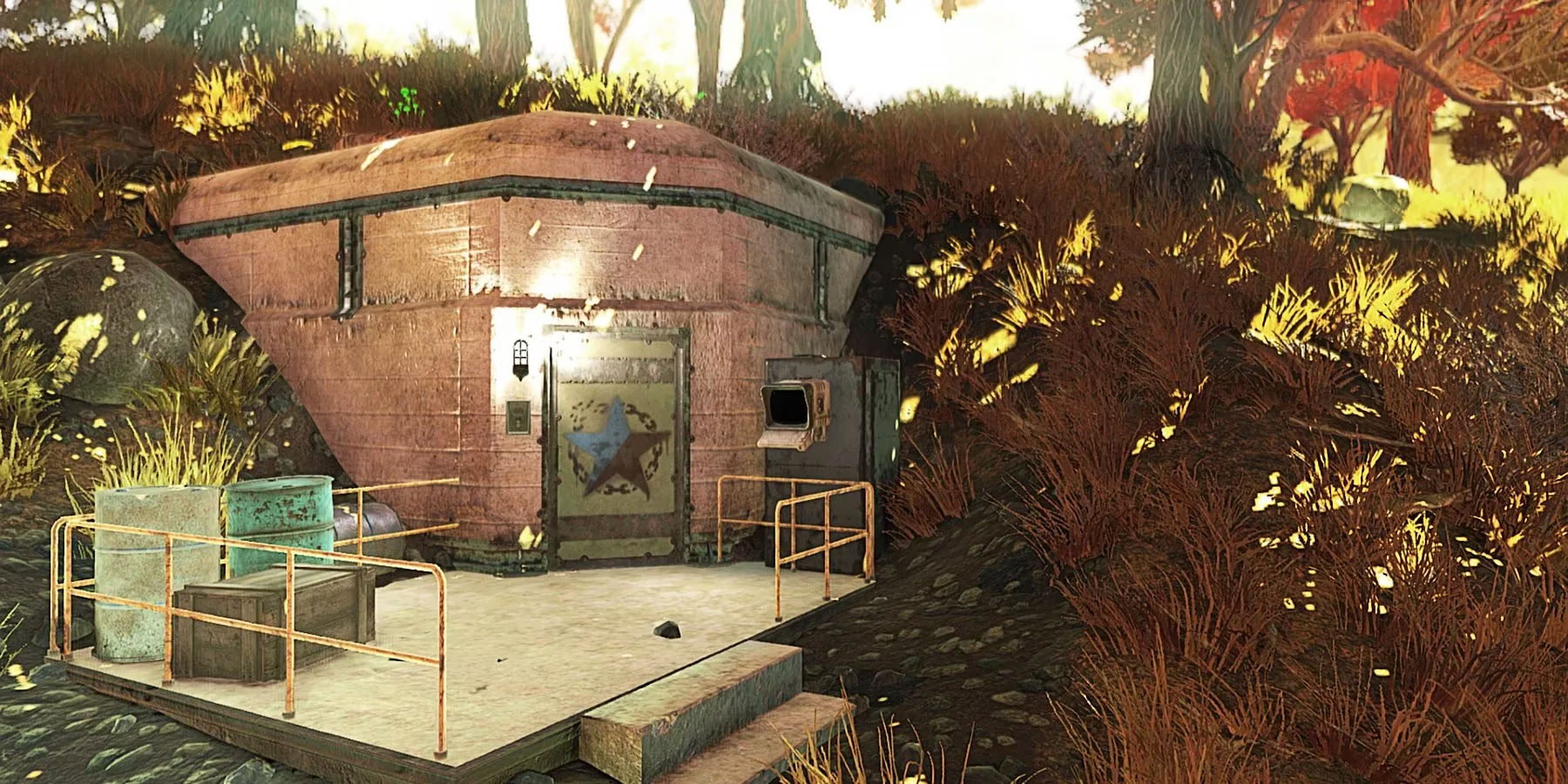
What truly elevates Fallout’s faction system is its influence on the endgame. In Fallout 4, your loyalty doesn’t just paint a different cutscene – it can wipe entire major factions off the map. That kind of permanent narrative consequence makes alternative playthroughs genuinely distinct, not just minor variations. A sequel to Hogwarts Legacy could adopt a similar philosophy. Each house questline should lead to a house‑specific climax, perhaps even a unique final boss or moral dilemma that tests the core trait of that house. A Gryffindor ending might require a sacrificial stand, while a Slytherin path could force you to outmanoeuvre a cunning adversary in a high‑stakes political game. If Avalanche Software embraces this, replayability would skyrocket. Right now I know plenty of players who finished Hogwarts Legacy once and felt no pull to return; house‑driven endings would have us diving back into the Wizarding World three more times, just to see how the story transforms.
Of course, implementing such a system would be a massive undertaking. Writing four fully branching narratives is exponentially harder than one linear plot. But Avalanche doesn’t have to craft entirely separate games – they could weave a core narrative that twists in act three depending on your house allegiance, much like Fallout’s main quest converges early but splits violently later. Even smaller, systemic changes would help. Exclusive spells, unique potion recipes, or even different relationship arcs with companions like Sebastian or Poppy would make house selection feel weighty. And let’s not forget the social aspect: Fallout factions often come with a reputation meter and internal politics. Imagine if Hogwarts Legacy 2 tracked your reputation within your own house – failing to embody your house’s traits might turn your peers against you, adding a layer of drama that the original game only hinted at.
I’ve been playing role‑playing games for decades, and the ones that stick with me are those where my choices ripple outward and reshape the world. Hogwarts Legacy nailed the atmosphere and spell‑casting, but it fumbled the role‑playing part by treating its most iconic feature as window dressing. As a player who has now spent countless hours in both the Wizarding World and the wastelands, I can say without hesitation that adopting Fallout’s faction depth would elevate a sequel from a nostalgic stroll into a truly personal magical journey. The demand is there – the first game sold over 24 million copies – and the technology has only improved in 2026. Avalanche Software has the talent and the lore; all they need is the courage to let our houses matter as much as the Sorting Hat promised they would. If they do, I’ll be lining up at midnight once again, ready to raise my wand and finally feel that my house is more than just a badge – it’s my destiny.
As we eagerly anticipate what a potential sequel could bring to the table, it's always worth keeping an eye on any opportunities to revisit the Wizarding World at a bargain. Finding the best deals on games like Hogwarts Legacy can significantly enhance the gaming experience by allowing you to explore other titles in the series or even delve into new adventures without breaking the bank. For those who frequently hunt for the best gaming prices, tools like a steam deal finder can be invaluable. They help you stay updated with the latest offers, ensuring you never miss out on a chance to expand your collection at an affordable rate.
Whether you're a seasoned wizard eager to replay Hogwarts Legacy with a new house or a newcomer ready to experience the magic for the first time, keeping tabs on price drops and special offers is always a good strategy. DealNest offers a comprehensive platform for gamers to discover the best deals and make the most out of their gaming budget. As we look forward to future adventures in magical realms, it's never a bad idea to have a handy resource to ensure you can access them without delay or excessive cost.
Comments