As the wizarding world's gaming profile continues to rise in 2026, the pressure on a Hogwarts Legacy sequel has never been greater. Avalanche Software's original title threw all its eggs in one basket by placing players directly inside the castle, sending them between classes, errands, and duels with dark wizards. The decision was right; it became the best Harry Potter game to date and posted astronomical sales. Yet that success also created a difficult creative problem. How does a follow-up improve on a game whose identity was so tightly wound around one iconic location?
A Familiar Foundation Was Necessary
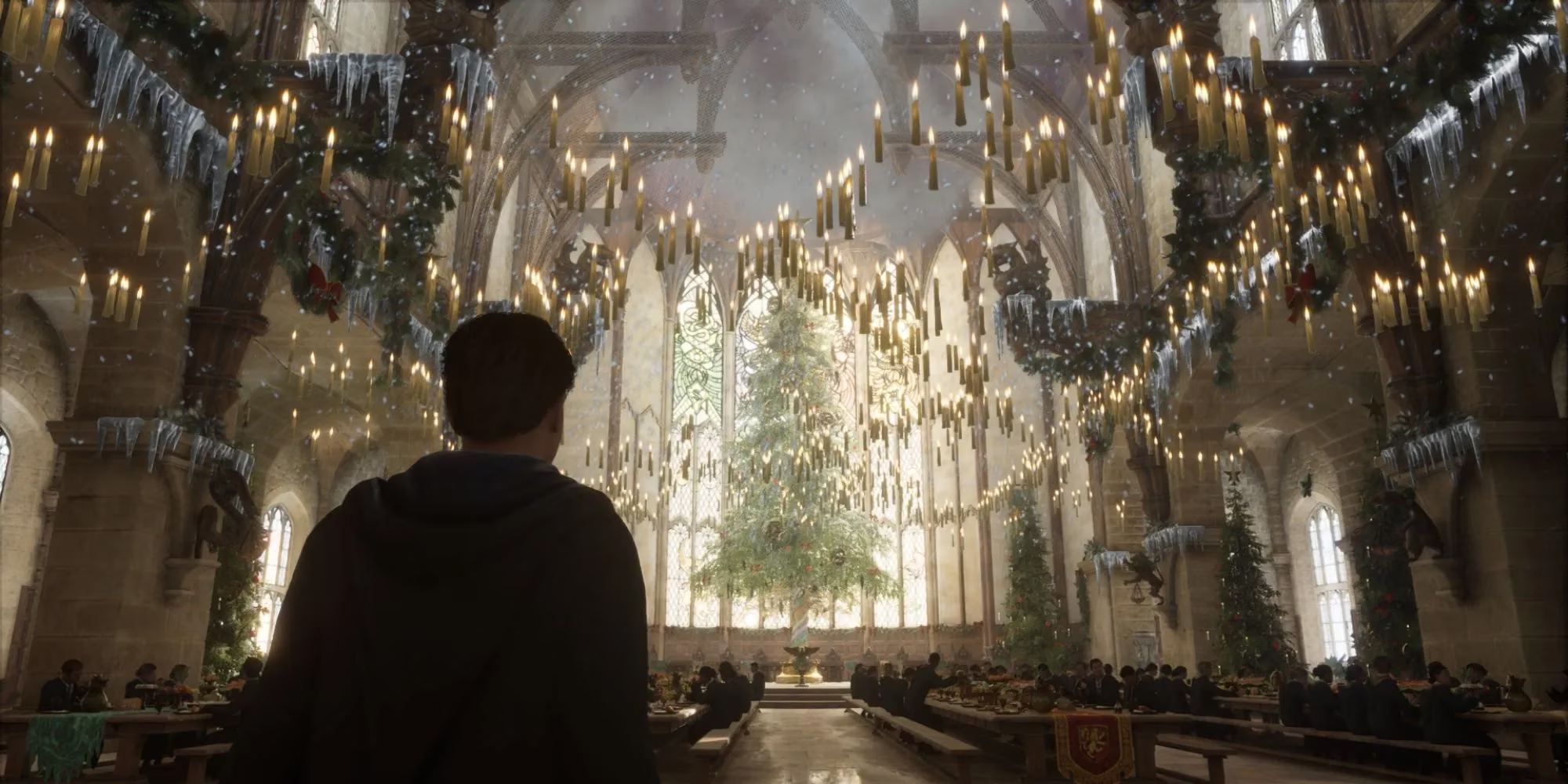
Avalanche had a tough task when it crafted an all-new experience in the Harry Potter universe, so it leaned on conventions for it to succeed. That meant familiar spells such as Expelliarmus and Confringo, but the familiarity extended to the setting. The walls of Hogwarts are packed with subtle secrets and impressive world-building that convey a great deal of history. Hogwarts School of Witchcraft and Wizardry, along with Hagrid's Hut and Hogsmeade, is where much of the established story lives, so starting there made commercial sense.
The Risk of Repeating the Same Grounds
Films such as Fantastic Beasts benefited from exploring new places, but the original Hogwarts Legacy was breaking ground in the gaming space and had to be conservative. The result was astronomical sales, so the sequel now has the freedom, and the difficult feat, of going in different directions, both narratively and geographically. Sending players back to the same castle as it exists in Hogwarts Legacy could feel repetitive. But changing it too much in pursuit of diversity may compromise the game's continuity. This is the core tension: how much familiarity should a sequel preserve before it becomes stagnation?
New Locations That Could Carry the Franchise
The castle and its grounds are large and ripe for great narratives, but more places could be explored in the next outing. Be it fictional areas like Diagon Alley or the Ministry of Magic that are as immersive and magical as the school, to real-life locations like King's Cross station in London, taking advantage of new pastures could be the break from Hogwarts Avalanche needs to add some diversity.
| Location | Narrative Potential |
|---|---|
| 🔮 Diagon Alley | Hub for commerce, illicit trades, and urban wizarding life |
| 🏛️ Ministry of Magic | Political intrigue, restricted archives, and high-stakes conflict |
| 🚂 King's Cross Station | Essential link between Muggle and magical worlds |
Could one of these settings carry the same aura as the castle? They certainly have the history and visual potential to do so.
Open-World Lessons from Zelda and Horizon
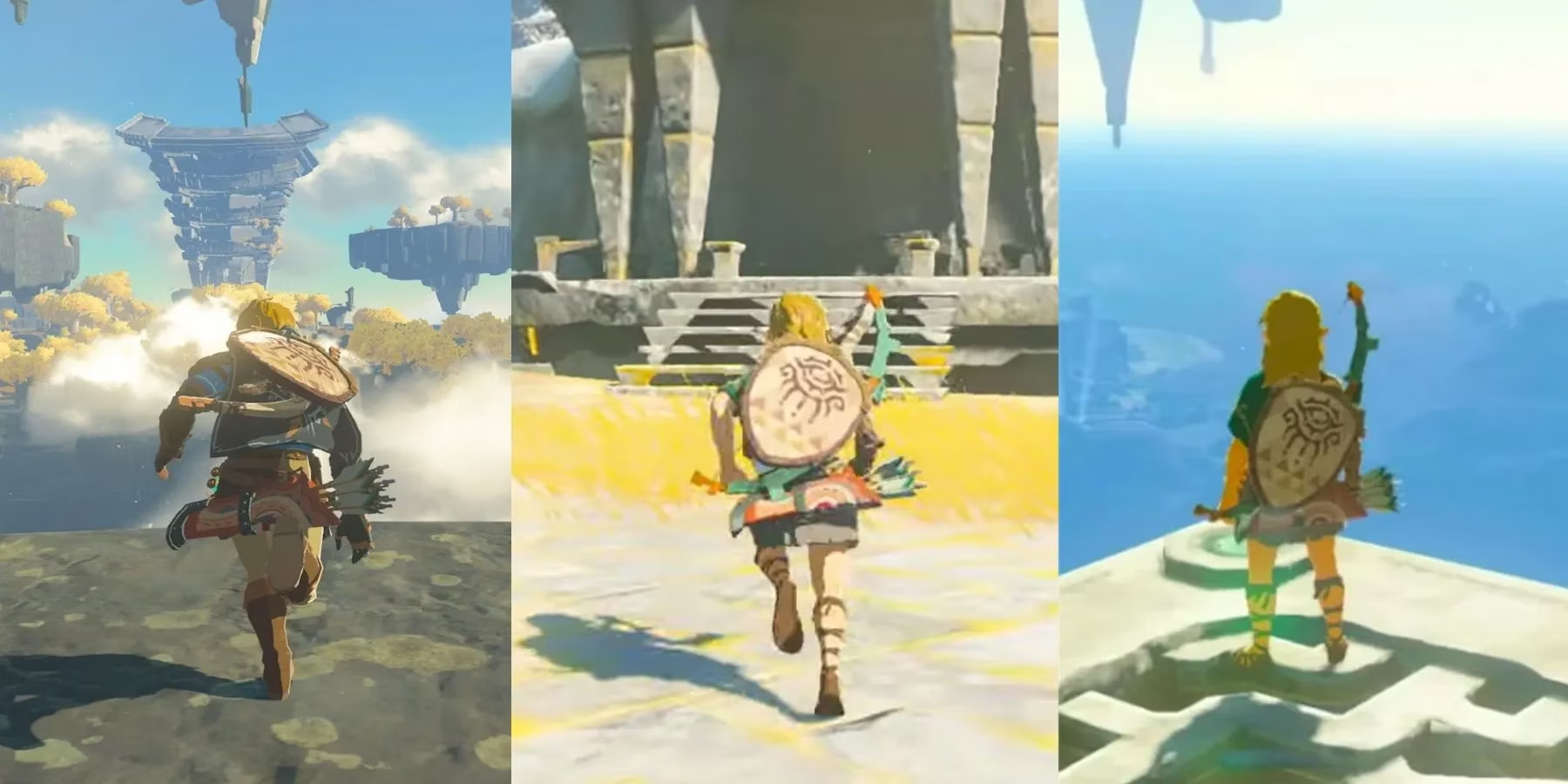
Non-linearity has been the flavor of gaming over the last couple of decades, with open-world offerings becoming greater and more ambitious each year. By 2026, The Legend of Zelda: Tears of the Kingdom and Horizon Forbidden West continue to show how sequels can honor their predecessors while expanding scope. Tears of the Kingdom is an advancement of Breath of the Wild, offering sky islands and the Depths to complement a familiar Hyrule. Horizon Forbidden West travels to a different part of the United States but retains artistic flourishes that make it feel in keeping with the first game.
Hogwarts Legacy does something similar, though perhaps not on as large a scale. The sequel must take cues from these philosophies: capture the same magic but in a world that is unique enough not to feel like a rehash. The iconic castle has been fleshed out wonderfully, and the task now is to one-up it elsewhere.
Balancing Continuity with Change
Variety is the spice of life and could be the savior of the franchise moving forward. If a sequel leans too heavily on the same halls, it risks diminishing returns. If it strays too far, it may lose the identity that made the original resonate. The ideal next chapter likely uses Hogwarts as an anchor while allowing players to journey beyond its gates, discovering new magical communities and secrets that the films only hinted at.
In the end, the question is not whether a sequel can succeed; the original proved there is appetite for a wizarding open-world. The real question is whether Avalanche can find a new basket for its eggs without dropping the old one. By 2026, with years of player feedback and open-world design lessons available, the studio has every reason to make that leap.
Comments