I still remember the collective sigh of relief when Hogwarts Legacy’s PlayStation-exclusive quest finally opened up to everyone back in 2024. It felt like a small victory, not just for players who had been locked out of a creepy, delightful side story, but for the entire idea that games should be whole no matter where you play them. Fast forward to 2026, and I have to ask: are we finally waving goodbye to the era of console-exclusive content? Or is there still a stubborn little corner of the industry clinging to it?
Let’s rewind. Console-exclusive games have been around forever — that’s the main reason many of us pick a platform in the first place. You want Zelda, you go Nintendo. You’re a Halo fan, you grab an Xbox. But console-exclusive content inside a game available everywhere? That’s a whole different beast. It always felt like a punishment for choosing the “wrong” device. Remember how Spider-Man was only available in the PlayStation version of Marvel’s Avengers? Or how Call of Duty: Modern Warfare locked an entire mode to one console? Those decisions baffled me. Why would a publisher willingly annoy half their audience?
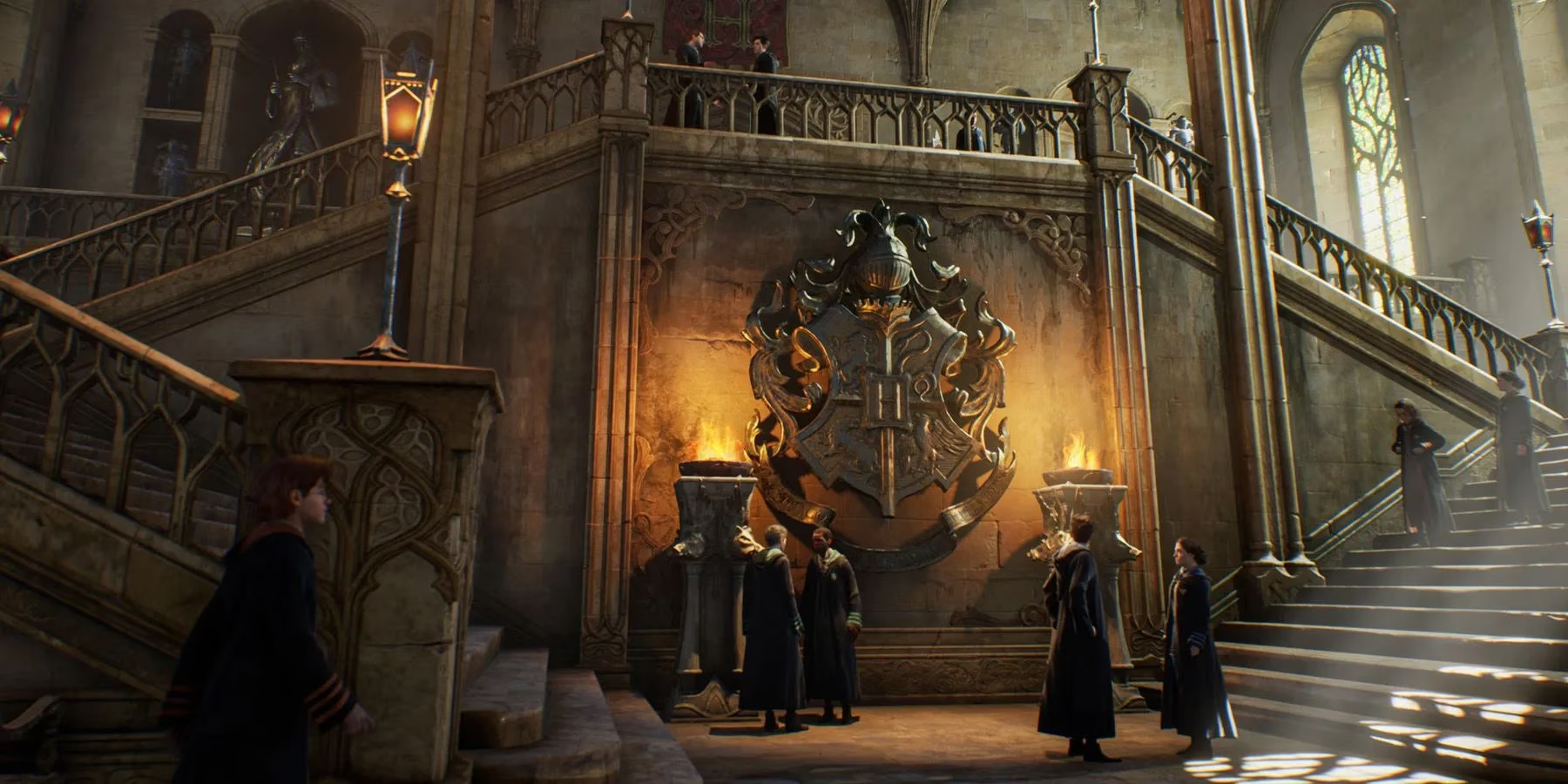
Hogwarts Legacy became a poster child for this frustration. The “Minding Your Own Business” quest was genuinely one of the best bits of the game, yet it sat behind a Sony paywall for an entire year. When Warner Bros. finally announced its multiplatform release in 2024, it felt like a watershed moment. I thought, “This is it — the industry is finally getting the message.” But did it? Well, yes and no.
In the two years since, we’ve seen a massive acceleration toward true platform agnosticism. Crossplay has become the norm, not the exception. Cloud gaming services let you jump into AAA titles on a potato laptop, and subscription libraries like Game Pass and PlayStation Plus Extra blur the lines between platforms entirely. Microsoft has practically abandoned the idea of Xbox exclusivity, bringing everything to PC on day one and even teasing select titles on rival consoles. Sony, once the fiercest defender of exclusivity, has shrunk its window for PC ports and launched live-service games simultaneously on multiple platforms. When The Last of Us Part III drops next year, rumor has it the PC version will arrive within three months — a timeline unthinkable a decade ago. Nintendo? They’re still Nintendo, but the Switch 2’s rumored integration with a robust PC cloud app suggests even they might be peeking over the fence.
So where does that leave console-exclusive content? The practice hasn’t entirely vanished, but it’s mutated into something far less annoying. Instead of locking entire quests or characters behind a corporate handshake, we’re seeing more timed-exclusive items like skins or beta access — things that don’t carve holes in the narrative. And even those are becoming rare. When Suicide Squad: Kill the Justice League added a PlayStation-only outfit in 2024, the backlash was so loud that Rocksteady patched it onto other platforms within a week. The message was loud and clear: players now expect a complete experience regardless of their chosen box of circuits.
But here’s a thought: is exclusive content always evil? What if a developer genuinely builds something that leverages unique hardware, like the DualSense controller’s haptics or the Switch’s motion controls? I’d argue that’s different — it’s about genuine innovation rather than a marketing check. The problem was never about hardware-specific features; it was about artificially carving out chunks of a game to broker a deal.
Looking ahead, I suspect 2026 will be remembered as the year console-exclusive content fully lost its teeth. With more players than ever refusing to pay full price for an incomplete package, the economic argument for exclusivity is crumbling. Why spend millions to lock content when you can earn more by selling it to everyone as Day One DLC? Two recent indie darlings tried the exclusive route on Game Pass and saw such a sales dip on other platforms that they quickly released parity patches. The market is speaking, and it sounds a lot like “just give us the whole game.”
So, will we miss it? Not one bit. The end of console-exclusive content isn’t just a win for consumers; it signals a maturing industry that finally respects our choice of hardware. Hogwarts Legacy’s unlocked quest was a small step, but it kicked open a door that I hope stays open for good. And if a publisher tries to pull that trick again in 2026, you’ll probably find me — and millions of others — pointing at the history books and asking, “Really? Haven’t we been through this already?”
Comments