It was a crisp autumn evening in 2026 when Ravenclaw prefect Alex returned to the hallowed halls of Hogwarts School of Witchcraft and Wizardry. Seven years had passed since the infamous goblin rebellion, but the magic within the walls of the ancient castle remained as potent as ever. As Alex strolled through the Viaduct Courtyard, the shifting staircase clicking softly behind them, a nagging thought surfaced—why did the castle feel… smaller than they remembered?
At first, Alex assumed it was nostalgia playing tricks. The towering spires and sprawling dungeons had always filled them with wonder. Yet, as they gazed across the Black Lake, the view felt cramped, like peering through a letterbox. It wasn’t until a friendly banter with a fellow student in the Hufflepuff common room that the culprit was identified: the camera angle.
“You haven’t adjusted your Field of View yet, have you?” asked a seventh-year with a knowing smirk, twirling a wand absentmindedly. “The default setting is fine for casual wanderings, but if you want to truly experience the magic—every nook, every shadow in the Forbidden Forest—you need to tweak it. Most newcomers never realize how much they’re missing.”
Intrigued, Alex dove into the game's settings that very night. The Field of View (FOV) slider, perched quietly in the Display Options menu, was a revelation. It controlled exactly how much of the game world was visible at any given moment, stretching from a claustrophobic -20 to a panoramic +20. No wonder the castle had felt so confined—Alex’s FOV had been set at a default that barely allowed them to see half the surrounding grandeur.
Adjusting it was surprisingly simple. With a few clicks, they navigated: Settings > Display Options > Field of View. The slider moved smoothly, and Alex experimented, first nudging it to +10. Instantly, the Room of Requirement transformed. Gone was the tunnel vision; now Alex could see the entire lunar-lit herbology station while still catching glimpses of the vivarium entrance. At +20, the camera pulled back even further, revealing architectural details and decorative motifs that had previously lurked outside the frame. But was there a catch?
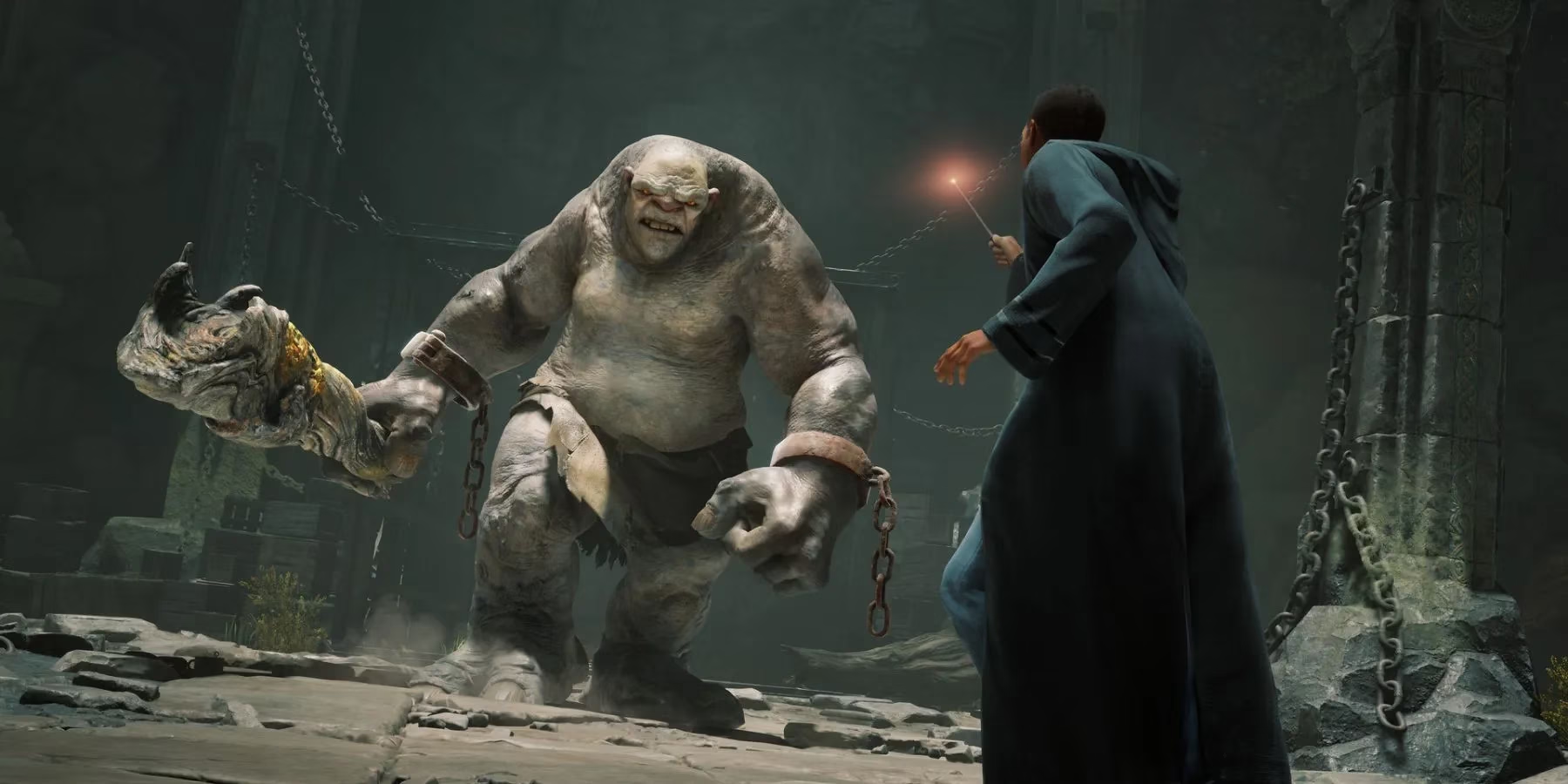
Indeed, the wizards at Portkey Games had crafted a world so dense with enchanted paintings, floating candles, and hidden corridors that increasing the Field of View came with a price. On Alex’s trusty PC, pushing the slider to +20 caused the fan to whirr louder. The game, despite several patches since its 2023 launch, still demanded substantial computing power when rendering broader vistas. It was a classic trade-off: more visual grandeur for less silky performance. For players with mid-tier hardware, dialing the FOV back to -10 or even -20 could yield a buttery-smooth experience, essential for dodging a troll’s club in the heat of battle.
What about console players? Alex’s friend, a Gryffindor who played on a PlayStation 5, had no such luxury. The camera angle on consoles remained locked at a fixed setting—a fact that had sparked heated debates in the Three Broomsticks over butterbeers. “It is a little disappointing,” the Gryffindor admitted, “but honestly, the default feels natural. The developers calibrated it for most players. It’s like the Great Hall ceiling—it knows exactly how much sky to show.” And there was wisdom in that acceptance. After all, the console’s fixed perspective was thoughtfully designed to showcase the game’s cinematic flair without overwhelming the senses.
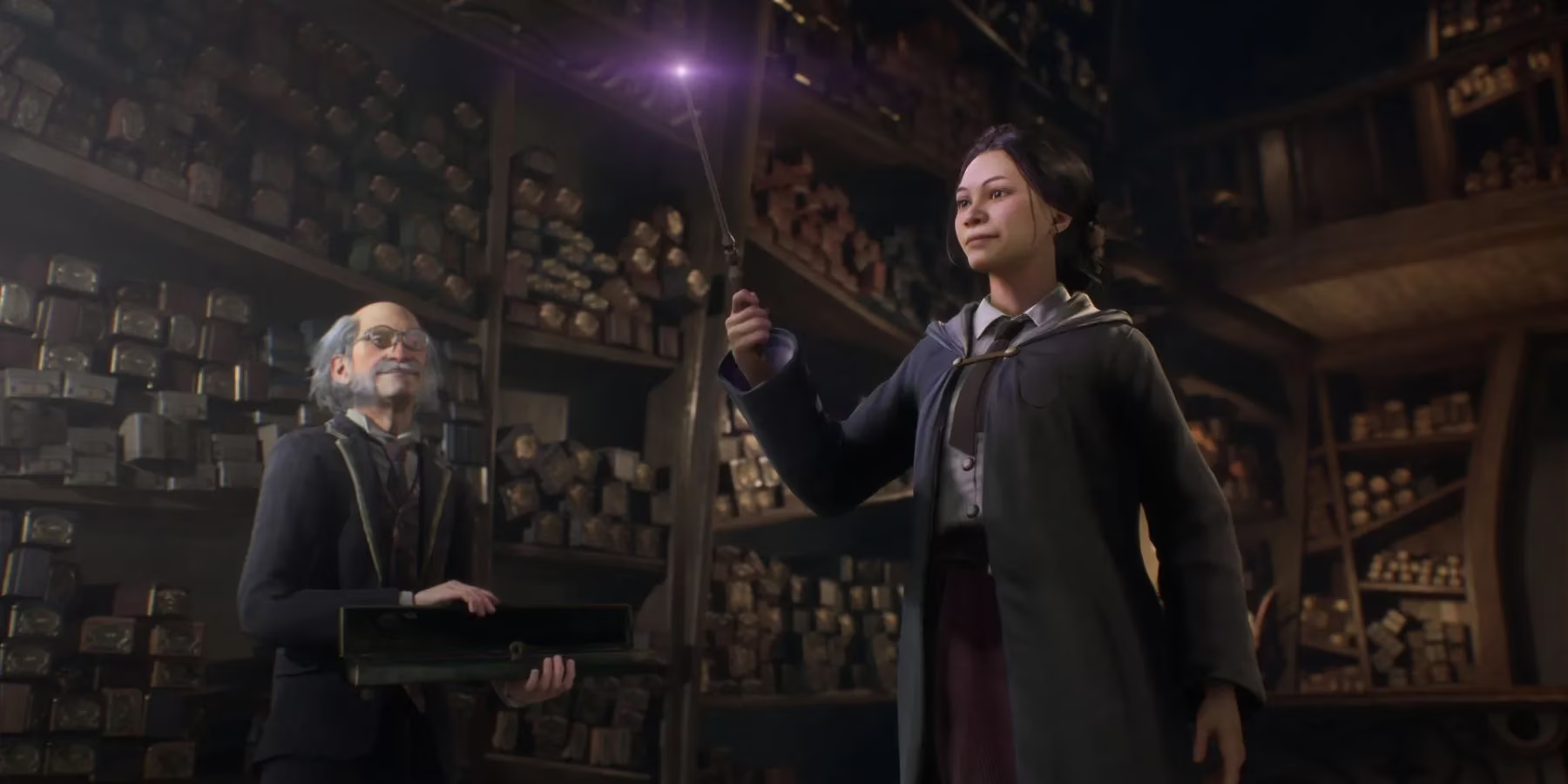
As days turned into weeks, Alex found the sweet spot at +12. The Forbidden Forest now felt truly vast, the towering trees casting long shadows that stretched across the entire screen. The greenhouses teemed with visible detail, from the flutter of mandrake leaves to the shimmer of moonstone. Even mundane tasks like collecting demiguise statues became more immersive. But the question remained: why hadn’t the game simply defaulted to a wider view? Perhaps the answer lay in the desire to let every student craft their own perspective. Much like choosing a wand or a house, the camera angle was a personal statement—one that shaped an entire journey through the wizarding world.
For those yet to tweak their settings, Alex had a simple advice: experiment. Spend an evening sliding between -20 and +20, stand atop the Astronomy Tower, and see what feels right. A wider view might reveal a secret passage; a narrower one could make dueling more intense. The magic of Hogwarts Legacy, after all, wasn’t just in the spells you cast but in how you chose to see the world. And in 2026, with mods and enhanced editions already emerging, that choice was more powerful than ever.
Comments